

In an era where uncertainty is the only constant, organizations face ever‑growing risks from data breaches to supply chain disruption and regulatory pressures.
Traditional manual risk tracking just isn’t enough anymore.
Enter risk management software, a powerful tool that not only identifies threats early but also helps organizations respond quickly and intelligently.
This blog will walk you through how this technology works and why it’s essential for modern business resilience.
The Evolving Threat Landscape and the Need for Modern Tools
Businesses today operate in an environment where risk isn’t just a possibility, it’s a probability. From cyberattacks that threaten customer data to operational interruptions that halt productivity, threats are multifaceted and rapidly evolving.
According to recent industry research, 78% of organizations have experienced at least one significant cybersecurity incident in the past year making cyber risk one of the most pressing business concerns globally.
Furthermore, 60% of companies say AI‑driven risk tools have improved their risk identification processes underscoring the increasing complexity and pace of threats.
This rising risk exposure highlights the need for automated, intelligent tools. Risk management software helps organizations stay ahead of threats, rather than react to them after damage has occurred.
What Risk Management Software Actually Does (and Why It Matters)
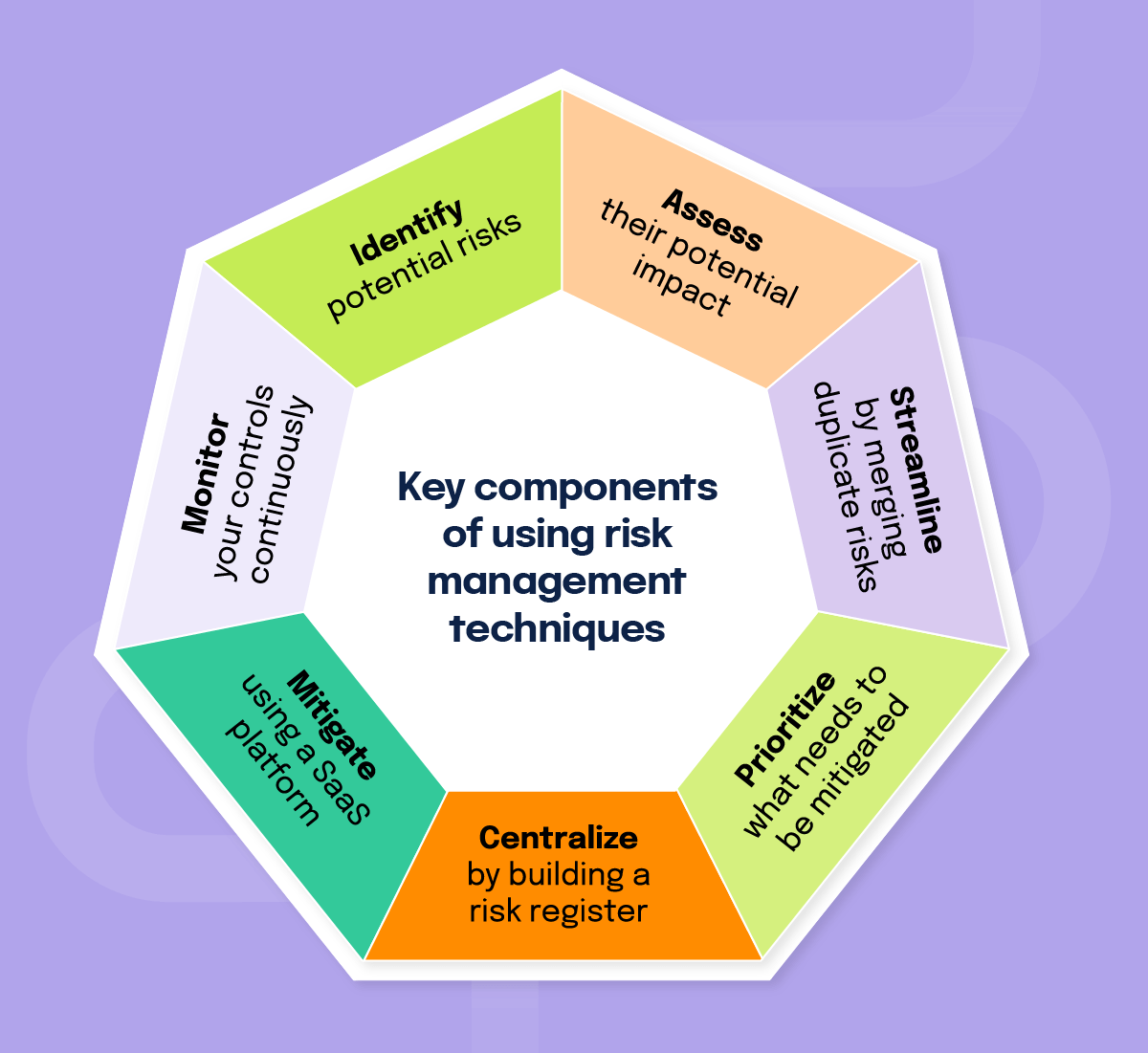
At its core, risk management software is a centralized platform that helps organizations identify, assess, and respond to risks faster and more accurately than manual processes.
It combines data collection, analytics, reporting, and real‑time monitoring into one tool, transforming raw risk signals into actionable insights.
Here’s a breakdown of its key functions:
Centralized Risk Identification
Organizations typically struggle with siloed risk data scattered across departments. Risk management software unifies this information, providing a single dashboard where all risk inputs converge. This not only speeds up identification but ensures nothing falls through the cracks.
Real‑Time Monitoring & Alerts
Instead of waiting for periodic risk reviews, modern software continuously scans internal and external data feeds. If a threat pattern emerges such as unusual access logs or compliance drift, systems can alert teams instantly.
Improved Decision‑Making Through Data
With robust analytics and visualization tools, risk management software helps decision‑makers understand the severity and likelihood of threats.
Scenario models and predictive scoring allow executives to prioritize their responses with clarity and confidence.
Transitioning from manual tracking to automated insights doesn’t just improve efficiency, it enables better strategic decisions across the organization.
The Growth of Risk Management Software Adoption
The adoption of risk management software has soared as organizations recognize the value of embedded risk intelligence.
By 2024, the market for risk management software was estimated to be worth nearly USD 3.7 billion and projected to expand to over USD 10.7 billion by 2032, growing at a compound annual growth rate (CAGR) of approximately 14.3%.
This growth is driven by several factors:
- Organizations across finance, healthcare, and manufacturing increasingly invest in automated risk solutions.
- Cloud‑based deployments now account for the majority of new installations.
- Advanced analytics and machine learning capabilities are becoming standard features.
As threats become more complex and digital transformation accelerates, investment in proactive risk tools is a strategic imperative.
How Risk Management Software Identifies High‑Impact Threats
A central strength of risk management software lies in its ability to detect high‑impact threats early, often before humans would notice the signs.
AI and Predictive Analytics
Most modern risk platforms integrate artificial intelligence and predictive analytics. These tools sift through large quantities of data, spotting patterns and anomalies that might indicate a brewing threat.
By learning from past incidents, the software can forecast future risks with increasing accuracy.
Continuous Risk Scanning
Rather than relying on annual or quarterly risk assessments, risk management software continuously monitors critical systems and processes.
This means emerging threats are spotted in real time whether it’s an unusual spike in network traffic or a supplier failing to meet compliance thresholds.
Integration with Enterprise Systems
Effective risk tools integrate with systems across an organization — such as ERP, financial systems, and cybersecurity platforms to provide a 360‑degree view of risk.
This comprehensive visibility enables faster and more accurate threat detection.
Thanks to these capabilities, teams can move from reactive firefighting to proactive risk prevention.
Mitigating Risks: From Detection to Action
Once high‑impact threats are identified, the real value of risk management software is seen in how it helps organizations respond and mitigate them.
Risk Prioritization
Not all risks are equal.
The software scores threats based on likelihood and potential impact, helping teams focus resources on the most critical issues first.
Automated Response Playbooks
Many platforms come with pre‑configured response playbooks- automated workflows that kick off specific mitigation steps when certain risk thresholds are crossed.
For instance, a sudden spike in access attempts from unknown IPs could trigger immediate access restrictions and alert IT security.
Continuous Monitoring of Risk Mitigation
After mitigation steps are put in place, the software continues to track the status of risks.
This ensures that threats are fully resolved and gives teams visibility into the effectiveness of their responses.
These features help companies reduce disruptions and minimize losses leading to stronger operational resilience.
Strategic Benefits Beyond Risk Control
Modern risk management software also drives strategic advantages across the organization:
Better Compliance
Automated tracking and reporting help organizations stay aligned with regulatory requirements. Instead of manually combing through policies and checklists, compliance modules streamline documentation and audit trails reducing the risk of penalties.
Enhanced Organizational Resilience
Tools that support scenario planning and stress testing help companies prepare for unlikely but impactful events such as a major supplier failure or a cyberattack during peak business cycles.
Competitive Advantage
Organizations with strong risk infrastructures are more likely to outperform competitors financially. Companies that implement formal risk management practices often see better operational outcomes, stronger investor confidence, and more agile decision‑making.
In fact, structured risk approaches can significantly reduce unnecessary losses and improve confidence in long‑term planning.
Challenges in Adopting Risk Management Software (And How to Overcome Them)
While the benefits of risk management software are clear, organizations still face challenges during adoption:
Cost and Integration Barriers
Initial deployment and integration with legacy systems can be costly. Teams should plan for phased rollouts and prioritize integration with mission‑critical systems first.
Clear budgeting and executive sponsorship also help smooth the transition.
Data Quality Issues
Poor risk outcomes often stem from incomplete or low‑quality data. Investing in data governance frameworks and training teams on data hygiene will dramatically improve software performance.
Training and Culture Shift
Tools are only as effective as the people who use them. Organizations must prioritize user training and risk‑aware cultures, ensuring every department understands how risk insights can enhance their workflows.
By addressing these hurdles strategically, companies can unlock the full potential of their risk platforms.
Conclusion
Today’s business risks are varied, complex, and increasingly digital.
Sticking with manual risk tracking or fragmented tools isn’t enough. Risk management software provides a comprehensive, data‑driven solution to identify, assess, and mitigate high‑impact threats long before they turn into crises.
By centralizing risk data, enabling real‑time monitoring, and automating critical responses, these platforms do far more than track problems, they empower organizations to act with confidence.
With rising cyber costs and fast‑paced changes in the risk landscape, adopting cutting‑edge risk management software has shifted from a competitive advantage to a business imperative.
The organizations that embrace these tools today will be the ones best equipped to thrive in tomorrow’s uncertain world.

