

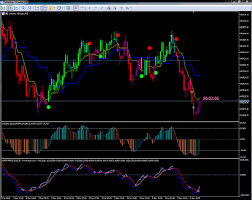
Most new traders are familiar with the traditional markets. However, under the hood, there is something else known as synthetic indices. Unlike the conventional stock, commodity, and forex markets, synthetic indices simulate real market movements without being tied to any underlying asset.
They operate 24/7 and are more predictable than the regular stock or forex markets, where price changes can happen unexpectedly. Here, we take a more in-depth look at synthetic indices and how they operate while also highlighting the risks involved.
Synthetic Indices: Behind the Scenes
To best understand the synthetic indices meaning, let’s take a look at how they work behind the scenes. The idea of synthetic indices came from the need to provide traders with trading instruments that are immune to geopolitical events, insider news, economic sanctions, and monetary policies.
Synthetic indices are artificial and are designed to simulate the real markets under controlled conditions. At the core of synthetic indices is a powerful algorithmic price generation tool, which uses random number generators and mathematical models to set prices.
How to Trade Synthetic Indices
§ Find a Broker
The first step is to find a broker that offers synthetic indices. The problem is that there are not many of them available. However, to make your search short, view website and register for an account. Then, download and install the MetaTrader 5 app on your device.
Once the app is installed, use the details provided by the broker to log in and start trading. However, we recommend practicing on the demo account first before you start making trades on your live account.
§ Choose a Synthetic Indices Strategy
The synthetic indices trading strategy you choose must reflect the behavior of the specific index. For example, you can hold short-term positions on volatility indices like the V25 or the V10.
You can use moving averages, the relative strength index (RSI), and Bollinger Bands to time entries and exits. Just like you would when trading in typical markets, use stop-loss and take-profit orders, manage position size relative to your capital, and avoid high leverage.
Key Characteristics of Synthetic Indices
§ 24/7 Availability
As online trading has become popular over the years, so has the need for 24/7 trading. This is also another significant factor that pushed for the creation of synthetic indices. Since they aren’t fixed to real-world exchanges with fixed opening and closing times, synthetic indices are available 24 hours a day from Monday to Sunday.
§ Algorithm-Driven Price Movement
Prices in the synthetic market aren’t driven by supply and demand or volatility. The price of oil going up in the real world doesn’t have a direct say on price movements in synthetic indices.
Instead, the market relies on a combination of mathematical models and random number generators to simulate price changes without relying on real-world assets.
§ Immune to Economic News or Geopolitical Events
Companies announcing their yearly profits, countries setting sanctions and waging tariff wars, or insiders leaking information don’t affect the price movements of synthetic indices. This makes synthetic indices purely technical, where traders rely on analytics and chart tools to predict trends and price changes.
