

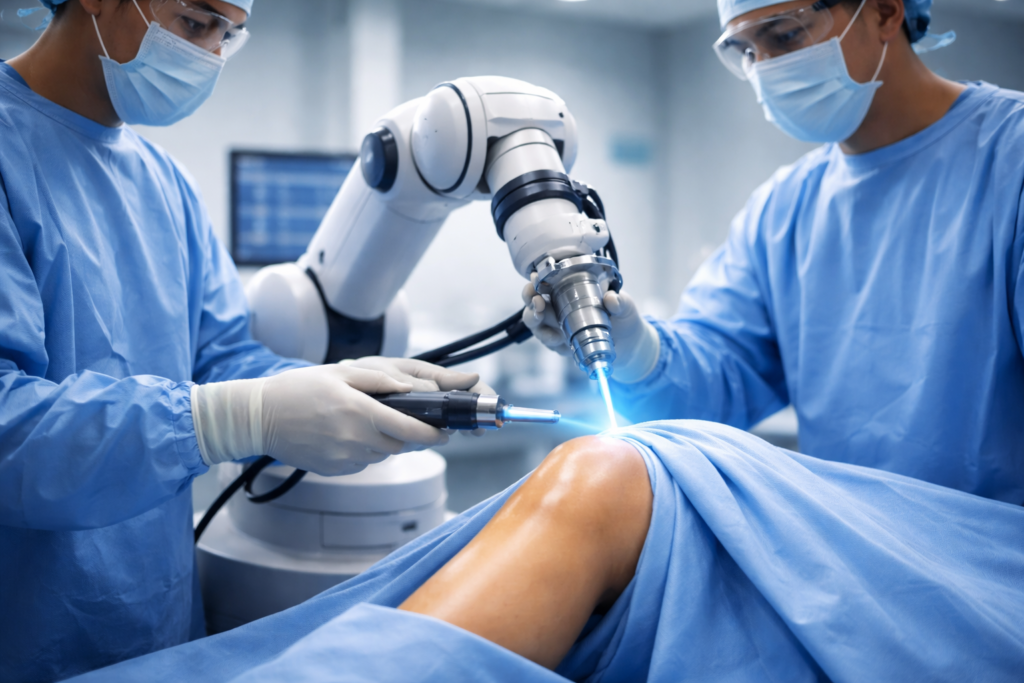
Knee pain caused by arthritis, joint degeneration, or injury can significantly affect mobility and quality of life. When medications, physiotherapy, and lifestyle changes fail to provide relief, doctors may recommend knee replacement surgery. One of the most common concerns for patients considering this procedure is the knee replacement surgery cost and the factors that influence it.
Knee replacement surgery is a highly effective orthopedic procedure designed to replace damaged knee joints with artificial implants, helping patients regain movement and reduce chronic pain. Advances in orthopedic technology, including robotic knee replacement surgery, have improved surgical precision and recovery outcomes. Understanding the procedure, costs, recovery process, and treatment options helps patients make informed decisions about their knee health.
What Is Knee Replacement?
Knee replacement surgery, medically known as knee arthroplasty, is a procedure in which damaged or worn-out parts of the knee joint are replaced with artificial implants.
The knee joint consists of three main bones:
- Femur (thigh bone)
- Tibia (shin bone)
- Patella (kneecap)
When cartilage between these bones wears away due to arthritis or injury, bones begin rubbing against each other, causing pain and stiffness.
During surgery, the damaged joint surfaces are removed and replaced with metal and plastic implants that mimic natural joint movement. The knee replacement surgery cost depends on factors such as implant type, hospital infrastructure, and surgical technique used.
Causes of Knee Replacement
Knee replacement surgery is usually recommended when joint damage becomes severe and affects daily activities.
Common causes include:
Osteoarthritis
The most common cause of knee joint damage is Osteoarthritis gradually wears down cartilage in the knee.
Rheumatoid Arthritis
An autoimmune condition that causes inflammation in joints and leads to cartilage damage.
Post-Traumatic Arthritis
Joint damage caused by previous injuries, such as fractures or ligament tears.
Severe Knee Deformity
Conditions like bow legs or knock knees can lead to uneven joint wear.
Hospitals such as Amicare Hospital often treat patients suffering from advanced knee arthritis using modern surgical techniques.
Symptoms of Knee Replacement
Patients who may need knee replacement surgery often experience the following symptoms:
- Severe knee pain during walking or climbing stairs
- Persistent knee stiffness
- Limited knee movement
- Swelling around the knee joint
- Pain even while resting or sleeping
- Difficulty standing for long periods
These symptoms usually worsen over time and may require surgical treatment.
Risk Factors
Several factors increase the likelihood of requiring knee replacement surgery.
Common risk factors include:
- Age above 50 years
- Obesity or excess body weight
- Previous knee injuries
- Family history of arthritis
- Sedentary lifestyle
- High-impact sports injuries
Early medical consultation at orthopedic centers such as Amicare Hospital can help diagnose knee problems before they become severe.
Diagnosis and Medical Tests
Doctors diagnose knee joint damage through clinical evaluation and imaging tests.
Physical Examination
The doctor evaluates:
- Knee movement
- Joint stability
- Swelling and tenderness
- Walking pattern
Imaging Tests
Common diagnostic tests include:
- X-rays to detect joint damage
- MRI scans to examine soft tissues
- CT scans for detailed bone evaluation
These tests help doctors determine the severity of arthritis and whether surgery is necessary.
Treatment Options
Not all knee pain requires surgery. Doctors usually recommend non-surgical treatments first.
Non-Surgical Treatment
Initial treatment options may include:
- Pain relief medications
- Anti-inflammatory drugs
- Physiotherapy
- Weight management
- Knee braces
If these treatments fail, surgery may be recommended.
Types of Knee Replacement
There are several types of knee replacement procedures depending on the severity of joint damage.
Total Knee Replacement
The entire knee joint is replaced with artificial implants.
Partial Knee Replacement
Only the damaged part of the knee joint is replaced.
Robotic Knee Replacement Surgery
A modern surgical technique that uses robotic assistance for precise implant placement.
Robotic knee replacement surgery improves surgical accuracy and often leads to faster recovery.
The knee replacement surgery cost may vary depending on the type of surgery performed.
Disadvantages of Knee Replacement Surgery
Although knee replacement surgery has a high success rate, patients should understand potential risks.
Possible disadvantages of knee replacement surgery include:
- Risk of infection
- Blood clots after surgery
- Implant wear over time
- Knee stiffness
- Need for revision surgery in rare cases
Choosing an experienced orthopedic surgeon can significantly reduce these risks.
Recovery and Rehabilitation
Recovery plays a crucial role in the success of knee replacement surgery.
The knee replacement surgery recovery time usually ranges from 6 to 12 weeks, depending on the patient’s health and rehabilitation program.
Early Recovery Phase
During the first few weeks after surgery:
- Patients begin walking with support
- Swelling gradually decreases
- Physiotherapy exercises begin
Rehabilitation Phase
Physiotherapy focuses on:
- Strengthening leg muscles
- Improving knee flexibility
- Restoring walking ability
Regular rehabilitation is essential for optimal results.
Exercises After Knee Replacement
Doctors often recommend exercises after knee replacement to strengthen the knee joint.
Common rehabilitation exercises include:
- Straight leg raises
- Knee bending exercises
- Quadriceps strengthening
- Walking exercises
These exercises help improve mobility and reduce stiffness.
Before and After Knee Replacement Surgery
Understanding expectations before and after knee replacement surgery helps patients prepare for the procedure.
Before Surgery
Patients may experience:
- Severe pain while walking
- Difficulty performing daily activities
- Limited knee movement
After Surgery
Most patients experience:
- Reduced knee pain
- Improved mobility
- Better quality of life
Specialized orthopedic centers like Amicare Hospital provide structured rehabilitation programs to help patients recover faster.
Knee Replacement Surgery Success Rate
The knee replacement surgery success rate is very high when performed by experienced orthopedic surgeons.
Studies show that:
- Over 90% of patients experience significant pain relief
- Most implants last 15–20 years
- Patients regain improved mobility
Success depends on factors such as patient health, surgical technique, and rehabilitation.
Top 5 Mistakes After Knee Replacement
Patients should avoid these top 5 mistakes after knee replacement to ensure proper healing.
- Ignoring physiotherapy exercises
- Walking without support too early
- Sitting in one position for long periods
- Skipping follow-up appointments
- Returning to heavy physical activity too soon
Following medical advice ensures better recovery outcomes.
Prevention Tips
Although knee replacement may be necessary in severe cases, certain habits can protect knee health.
Helpful prevention tips include:
- Maintaining a healthy body weight
- Exercising regularly to strengthen leg muscles
- Avoiding excessive strain on the knee joint
- Treating knee injuries promptly
- Following proper posture during physical activity
Early treatment can delay the need for surgery.
When to See a Doctor
Consult a healthcare professional if you experience:
- Persistent knee pain lasting several weeks
- Difficulty walking or climbing stairs
- Knee swelling and stiffness
- Reduced knee movement
- Pain that does not improve with medication
Early diagnosis improves treatment outcomes.
Frequently Asked Questions (FAQs)
1. What is the average knee replacement surgery cost?
The knee replacement surgery cost varies depending on hospital facilities, implant type, and surgeon expertise. Advanced techniques such as robotic surgery may increase the cost but improve precision.
2. How long does knee replacement surgery recovery take?
The knee replacement surgery recovery time typically ranges from 6–12 weeks, although full recovery may take several months depending on rehabilitation.
3. Is robotic knee replacement surgery better?
Robotic knee replacement surgery improves implant accuracy and surgical precision, which may lead to better long-term outcomes and faster recovery.
4. What are the risks of knee replacement surgery?
Possible risks include infection, blood clots, stiffness, and implant wear. However, complications are rare when surgery is performed by experienced surgeons.
5. How long do knee implants last?
Most knee implants last 15–20 years or longer, depending on the patient’s lifestyle and implant quality.
Final Thoughts
Understanding the knee replacement surgery cost helps patients prepare for treatment and make informed healthcare decisions. Knee replacement can significantly reduce chronic pain and restore joint mobility when conservative treatments no longer work.
Modern advancements, such as robotic knee replacement surgery and structured rehabilitation programs, improve surgical accuracy and recovery outcomes. At Amicare Hospital, experienced orthopedic specialists provide advanced diagnosis, personalized treatment, and comprehensive post-surgery care to help patients regain an active, pain-free lifestyle.
