

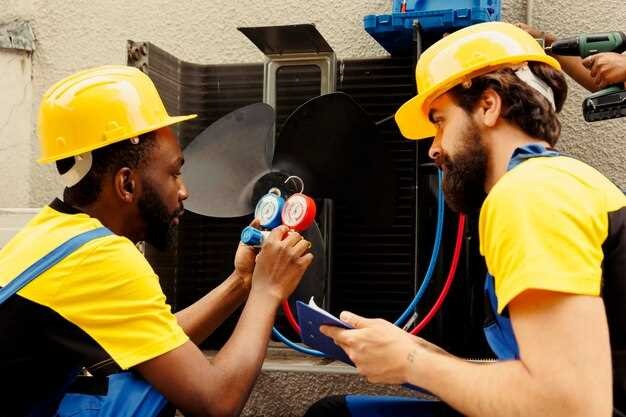
Your air conditioning unit will break down at some point. Maybe not this summer, maybe not next year, but it will happen. That’s just reality. Every homeowner in Alberta knows that sinking feeling when you flip on your cooling system on a hot July afternoon only to hear a strange rattling noise, or worse, nothing at all. Here’s something I think a lot of people overlook. Knowing which failures happen regularly, along with a ballpark figure for fixing each one, can save you from panic decisions. You won’t get pressured into overpaying a technician if you already have a rough idea of fair pricing. Perhaps that sounds obvious, but you’d be surprised at how many folks, sorry, how many homeowners go in completely blind. Refrigerant leaks, faulty capacitors, clogged drain lines, worn contactors, broken fan motors. These pop up again, again, then again. Some fixes run you $150 to $300. Others can push past $1,000 depending on your unit’s age, brand, or accessibility. A compressor replacement, for instance, might set you back $1,500 or more. Meanwhile, swapping out a capacitor could be under $200 including labor. Big range, right? We put this guide together so you can walk into any service call with realistic expectations. No guesswork, no nasty surprises on your invoice. Whether your system is blowing warm air, cycling on then off too quickly, or making sounds it definitely shouldn’t be making, there’s a good chance you’ll find your specific situation covered below. One quick note. Prices can vary quite a bit across Alberta depending on where you live, who you call, even what time of year it is. Emergency weekend calls in July? Those will always run higher. So treat every dollar figure here as a reasonable estimate rather than a guarantee. With that in mind, let’s get into it.
While basic maintenance like clearing debris from an outdoor condenser or swapping out a saturated air filter can resolve minor performance dips, deeper mechanical failures often remain hidden from the untrained eye. Faulty capacitors or pitted contactors may cause the system to hum without starting, leading to unnecessary stress on the compressor. When troubleshooting reveals persistent electrical trips or suspicious hissing sounds, many homeowners decide to get HVAC help in Henderson NV to ensure a safe and accurate diagnosis. Addressing these underlying complexities promptly prevents minor component wear from escalating into a total system collapse during peak summer temperatures. Proper technical oversight remains the most reliable way to maintain consistent indoor comfort and protect your household’s long-term mechanical investments.
Frequent AC Fixes Homeowners Face, Plus Typical Price Ranges
Your air conditioning unit will eventually need attention, no matter how well you maintain it. Some issues pop up more than others, though. Refrigerant leaks, faulty capacitors, worn contactors, clogged drain lines, broken fan motors. These account for a large share of service calls across Alberta every summer. Knowing a rough price range helps you budget ahead of time so you don’t get caught off guard when your system decides to quit on a 30-degree afternoon. Refrigerant recharges tend to run anywhere from $200 to $600 depending on your unit type. If there’s a leak involved, expect to pay more for detection work plus patching. I think a lot of homeowners underestimate this one because it seems like a simple top-up, but locating a leak in copper lines or evaporator coils can be time-consuming.
Electrical Component Failures
Capacitors fail regularly. A replacement usually falls between $150 to $350, parts plus labour included. Contactors, which handle electrical connections inside your condenser, sit in a similar range. These small components take a beating from constant cycling, especially during our short but intense Alberta summers. Worth keeping in mind: if your AC hums but won’t start, a dead capacitor is often to blame. Fan motor replacements carry a heftier price tag. You could be looking at $300 to $700 for a condenser fan motor swap. Blower motors on indoor units sometimes reach $800 or more. The variance depends on your specific model, availability of parts, and whether the technician needs to order something in.
Drainage, Thermostats, Plus Other Smaller Fixes
Clogged condensate drain lines rank among the simpler fixes. A service call to clear one might only set you back $100 to $250. Still, ignoring a blocked drain can lead to water damage inside your home, which is a far bigger bill. Thermostat issues sometimes get overlooked too. A faulty thermostat replacement ranges from $150 to $400, though occasionally the problem turns out to be wiring rather than the unit itself. Compressor failure is perhaps the one you hope never happens. Replacing a compressor can easily reach $1,500 to $2,500, and at that price point, many technicians will suggest evaluating whether a full system replacement makes more financial sense, particularly if your unit is over 10 years old. It’s a judgment call that depends on your equipment’s age, overall condition, and efficiency rating. One thing homeowners can do to reduce service frequency is keep up with basic upkeep. Swap your filters monthly during peak season. Keep vegetation trimmed back at least two feet from your outdoor condenser. Schedule a professional tune-up each spring. None of this guarantees zero breakdowns, but it does reduce your odds of an emergency call during a heatwave. If you’re in Alberta, PROPERTY WERKS keeps lawns trimmed tight around AC units as part of regular mowing service, which is a small detail that actually matters for airflow.
Refrigerant Leaks, Compressor Failures, and Capacitor Replacements: Breakdowns That Hit Home AC Units Hardest
If you own a home in Alberta, your air conditioning unit probably sits idle for a good chunk of the year. That long stretch of inactivity can actually accelerate wear on certain components. When summer finally arrives and you flip the switch, problems tend to show up fast. Three issues account for a large percentage of service calls across the province: refrigerant leaks, compressor failures, and worn out capacitors. Each one has a different price tag, a different level of urgency, and a different impact on your comfort. Refrigerant leaks rank among the top reasons homeowners call an HVAC technician during peak cooling season. Your system doesn’t “use up” refrigerant the way a car burns gasoline. It circulates the same charge over and over. So if levels drop, there’s a leak somewhere, period. Small pinhole leaks in the evaporator coil or along copper line sets can go unnoticed for weeks. You might notice your unit running longer cycles without actually cooling your rooms. A technician will need to locate the leak, patch or replace the affected section, and then recharge the system. Depending on the refrigerant type, expect to pay anywhere from $200 to $1,500. R-410A is still relatively affordable, but if your older unit runs on R-22, which was phased out in Canada, sourcing that refrigerant gets expensive quickly. I’ve heard of homeowners paying close to $2,000 just for the recharge on an R-22 system, which at that point makes you wonder whether a full replacement is the smarter move. Compressor failure is the one nobody wants to hear about. The compressor is the heart of your AC, responsible for pressurizing refrigerant and pushing it through the system. When it dies, your unit blows room temperature air or simply won’t turn on at all. Replacing a compressor typically runs between $1,500 and $3,000, including parts and labour. Some quotes go higher depending on the brand, unit size, and accessibility. Here’s where it gets tricky, though. If your system is more than 10 or 12 years old, many technicians will recommend replacing the entire outdoor unit rather than just the compressor. The reasoning is straightforward:
- A new compressor in an aging system may only buy you a few more years before something else fails.
- Warranty coverage on a standalone compressor replacement is often limited compared to a new unit.
- Newer systems use less electricity, so the long term savings on energy bills can offset the higher upfront price.
Capacitor replacements sit at the opposite end of the cost spectrum, and perhaps that’s why people overlook them until something goes wrong. Capacitors store and release electrical energy to start and run the motors inside your AC unit. There’s usually a start capacitor and a run capacitor, sometimes combined into a dual capacitor. When one fails, your fan might hum without spinning, or the compressor won’t kick on. It’s a surprisingly frequent issue, especially after units sit dormant through Alberta’s long winters. A capacitor swap is one of the cheaper fixes you’ll encounter, typically between $150 and $350 with a service call included. The part itself might only be $20 to $50. One thing worth paying attention to is preventive maintenance. A yearly tune up before cooling season can catch refrigerant pressure drops, weak capacitors, and early signs of compressor strain before they turn into emergency calls on a 30 degree Saturday afternoon. Many HVAC companies in Alberta offer seasonal maintenance packages that include inspecting electrical connections, testing capacitor strength with a multimeter, checking refrigerant levels, and cleaning coils. These visits usually run $100 to $200, which feels like a bargain compared to any of the failures listed above. Knowing which component failed matters because it directly shapes your decision. A $200 capacitor swap is an easy yes. A $2,500 compressor replacement on a 14 year old unit deserves a longer conversation. If you’re unsure, get two quotes. Talk to technicians who will explain what failed and why, not just hand you an invoice. Your AC doesn’t need to be a mystery. It’s a mechanical system with parts that wear out on a predictable timeline, and understanding that timeline puts you in a better position every single summer. *AC repair link*
Calgary Air Heating and Cooling Ltd Contact Information:
Address
95 Beaconsfield Rise NW, Calgary, AB T3K 1X3
Phone
+1 (403) 720-0003
Hours of operation
7 a.m.–11 p.m. (including weekends)
Website
Map
Get DirectionsQ&A:
My AC unit is blowing warm air instead of cold. What’s usually wrong, and how much should I expect to pay for the fix?
Warm air coming from your AC is one of the most frequent complaints homeowners have, and it can stem from several causes. The most likely culprit is low refrigerant, which usually means there’s a leak somewhere in the system. A refrigerant recharge alone typically costs between $150 and $400, but if a technician needs to find and repair the leak first, the total bill can climb to $500–$1,500 depending on where the leak is located. Another possibility is a faulty compressor, which is a much pricier repair — anywhere from $1,200 to $2,800 including parts and labor. Before you panic, though, check your thermostat settings and make sure your air filter isn’t completely clogged. A dirty filter restricts airflow enough to make the system feel like it’s barely cooling, and replacing one costs almost nothing.
How often do capacitors fail in residential AC systems, and is that something I can replace myself?
Capacitor failure is extremely common — technicians see it all the time, especially during peak summer months when the system is running hard. A failing capacitor usually announces itself with a clicking sound at startup, the outdoor fan not spinning, or the unit struggling to turn on at all. The part itself is cheap, usually $10 to $50, but a professional service call with labor brings the total to roughly $150–$400. As for doing it yourself: capacitors store electrical charge even when the power is off, so there’s a real shock hazard if you don’t know how to safely discharge one. Plenty of handy homeowners do swap them out after watching a tutorial, but if you’re not comfortable working around electrical components, it’s worth calling a pro. The money you save isn’t worth a trip to the emergency room.
Our AC keeps cycling on and off every few minutes. What repair am I looking at here?
That rapid on-off behavior is called short cycling, and it puts a lot of stress on the compressor over time. There are a handful of things that cause it. A dirty or frozen evaporator coil is one — cleaning or thawing it out might only run you $100–$400 for a professional coil cleaning. An oversized unit for your space can also short cycle, but that’s a design issue rather than a repair. More often, the problem is a failing thermostat (replacement runs $150–$350 installed), a refrigerant issue, or an electrical problem with the control board. Control board replacements tend to fall in the $200–$600 range. I’d suggest having a technician diagnose the specific cause before assuming the worst, because sometimes the fix is as simple as relocating a thermostat that’s sitting in direct sunlight and getting false temperature readings.
Is it true that replacing a condenser fan motor is one of the pricier AC repairs? My neighbor just got charged over $600 for one.
Your neighbor’s bill sounds about right, actually. Condenser fan motor replacement is a pretty standard repair, and it typically ranges from $300 to $700 depending on the motor type and your location. OEM (original equipment manufacturer) motors cost more than universal replacements, and some HVAC companies mark up parts significantly. The motor itself can be anywhere from $80 to $250, and labor adds another $150–$400 on top of that. Signs that the motor is going bad include the outdoor unit making a buzzing noise without the fan turning, intermittent spinning, or the fan rotating sluggishly. If caught early, it’s a straightforward swap. If ignored, the compressor can overheat from lack of airflow across the condenser coils, and that turns a $600 repair into a potential $2,000+ compressor replacement. So your neighbor probably made a smart call getting it handled when they did.
