
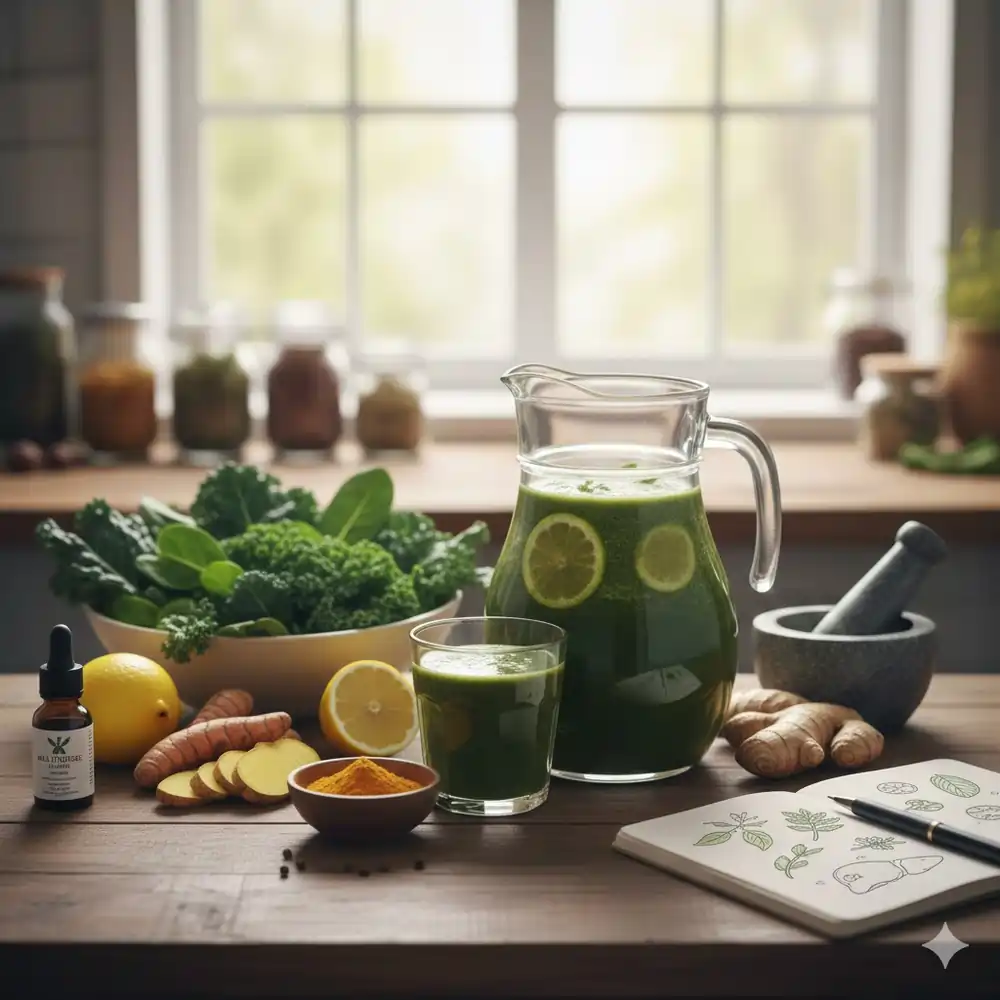
How to cleanse your liver is a popular question because “clean” sounds simple. Real liver health is rarely simple. The liver is already your body’s main filtering and processing organ. So the smartest approach is not a harsh cleanse. It’s removing what overloads your liver and adding what helps it do its job.
This guide is practical and evidence-based. You’ll get clear steps, safety flags, and a simple plan you can follow without extreme diets.
What does “cleanse your liver” actually mean?
Most “liver cleanses” imply your liver is dirty and needs special products to flush toxins out. That framing is misleading. Your liver continuously processes substances, transforms them, and helps your body eliminate waste through bile and other pathways. “Detox” programs marketed as a fix for liver damage are not proven to do that.
A better definition:
- “Cleanse” = reduce liver load (alcohol, ultra-processed foods, excess calories, unnecessary supplements)
- “Support” = improve metabolic and inflammation drivers (weight, insulin resistance, sleep, movement, nutrition)
How common are liver problems, really?
A quick stats snapshot
- Fatty liver is common worldwide—recent research places global prevalence around roughly one in three adults, depending on region and methods.
- Risk rises sharply with metabolic factors (overweight/obesity, type 2 diabetes). For example, NIDDK notes NAFLD is present in up to ~75% of people who are overweight and >90% in severe obesity; and one-third to two-thirds of people with type 2 diabetes may have NAFLD.
How do you know if your liver needs medical attention?
Many liver conditions don’t cause obvious symptoms early. So don’t rely on “how you feel” as your only signal.
Red flags to take seriously (seek medical care)
- Yellowing of skin/eyes (jaundice)
- Dark urine + pale stools
- Severe or persistent upper-right abdominal pain
- Swelling in legs/abdomen, easy bruising, confusion
- Unexplained fatigue + abnormal liver blood tests that persist
What tests do clinicians usually use?
- Blood tests: ALT, AST, alkaline phosphatase, bilirubin, albumin, INR (context matters; one abnormal result ≠ diagnosis)
- Imaging: ultrasound; sometimes elastography for fibrosis risk
- Risk-based screening: For example, routine hepatitis C screening is recommended for adults 18–79 in the U.S. (your country may differ).
If you suspect liver disease, a “cleanse” is not a substitute for evaluation.
What actually helps your liver function? (High-impact, evidence-based)
1) If you have fatty liver risk, modest weight loss can matter
For metabolic fatty liver, lifestyle change is first-line. Clinical guidance consistently emphasizes diet + physical activity and weight reduction as core management.
A practical target often discussed in clinical guidance: about 5–10% weight reduction is associated with improvements in liver fat and related markers (individual results vary).
2) Choose a “boring” diet pattern that you can repeat
The liver benefits most from patterns that reduce insulin resistance and chronic inflammation.
Strong default:
- Mostly minimally processed foods
- High fiber (vegetables, legumes, whole grains if tolerated)
- Adequate protein
- Healthier fats (nuts, olive oil, fish)
This aligns well with common clinical approaches used for metabolic liver disease (not a “detox,” just a repeatable pattern).
3) Move in a way you can sustain
Exercise helps even before major weight loss by improving insulin sensitivity and triglyceride handling. Aim for consistency over intensity.
A beginner-friendly baseline:
- 20–30 minutes brisk walking most days
- 2×/week basic resistance training (full body)
4) Coffee may be protective (for some people)
Multiple studies suggest coffee intake is associated with lower odds of significant liver fibrosis in people with NAFLD (association, not proof of cause). One meta-analysis reported about 35% decreased odds of significant fibrosis (RR ~0.65).
If you tolerate caffeine and it doesn’t worsen anxiety, reflux, or sleep quality, coffee can be a reasonable habit. Don’t force it if it doesn’t suit you, and some people may also explore supportive wellness products such as gallbladder cleanse supplement as part of their routine.
5) Alcohol: “less” is the safest clean-liver policy
Alcohol is a direct liver stressor. If you drink, reducing frequency and amount is a high-leverage step. Public health guidance emphasizes moderation limits, and newer messaging increasingly centers on “less is better for health.”
Table 1 — Practical changes that move the needle
| What to do | Why it helps (plain English) | Simple way to start this week |
|---|---|---|
| Cut sugary drinks | Lowers excess calories and liver fat drivers | Replace 1 drink/day with water or unsweetened tea |
| Eat fiber daily | Improves metabolic markers; supports gut-liver axis | Add 1 cup of beans or 2 servings of veg/day |
| Walk after meals | Helps glucose control and triglycerides | 10-minute walk after lunch |
| Build protein at breakfast | Reduces cravings, supports weight goals | Greek yogurt/eggs/tofu + fruit |
| Sleep on a schedule | Poor sleep worsens insulin resistance | Same wake time 5–6 days/week |
| Reduce alcohol | Lowers liver workload | “Dry weekdays” or halve servings |
Are herbs useful for liver support—and what’s the catch?
People look for herbs because they want a shortcut. Some herbs have promising signals in studies, but the picture is mixed, and safety matters because supplements can also injure the liver.
First, the safety reality (don’t skip this)
NIH’s LiverTox notes many herbal and dietary supplements have been implicated in liver toxicity, and complex mixtures can include contaminants or unlabeled ingredients.
A well-known example: green tea extract (concentrated forms, not normal tea drinking) has been linked to clinically apparent acute liver injury, including rare severe cases.
So if you’re exploring a liver detox, treat supplement safety as the main topic, not a footnote.
What about milk thistle (silymarin)?
Milk thistle is one of the most studied “liver” herbs.
- Older systematic reviews found limited or inconsistent evidence on hard outcomes (like mortality) and mixed effects on labs.
- Newer analyses in NAFLD/NASH settings suggest silymarin may improve some metabolic and lab markers in certain trials, but study quality, dosing, and outcomes vary.
Practical takeaway: milk thistle might help some parameters for some people, but it’s not a proven “cleanse,” and it shouldn’t replace evaluation or lifestyle changes.
Table 2 — Common “liver herbs”: evidence signals vs real-world cautions
| Herb / ingredient | What research often looks at | What you should be cautious about |
|---|---|---|
| Milk thistle (silymarin) | ALT/AST changes, oxidative stress markers | Mixed evidence; product quality varies |
| Green tea extract | Weight-loss blends, antioxidant claims | Linked to rare but serious liver injury in extracts |
| Multi-ingredient “detox” blends | “Cleanse” marketing outcomes | Unlabeled ingredients/contaminants are a known issue; risk rises with mixtures |
Rule that prevents problems: if a product is a proprietary blend, “fat burner,” or promises rapid cleansing, treat it as higher risk.
What should you avoid if your goal is a healthier liver?
1) Extreme fasting + “flushes” as a routine
Short fasts can be appropriate for some people under guidance, but extreme regimens and laxative-style “cleanses” can backfire through dehydration, rebound overeating, or unsafe supplement stacking. Also: they don’t have evidence for reversing liver damage.
2) Accidentally overdosing on acetaminophen (paracetamol)
Acetaminophen is common in cold/flu combos. Taking too much can cause severe liver damage. The FDA warns about overdose risk, especially when people take multiple products containing acetaminophen.
MedlinePlus also highlights that excessive intake can cause liver damage serious enough to require transplantation.
Simple prevention: check labels and avoid “stacking” meds with the same ingredient.
3) Treating supplements as “food”
Supplements are not regulated like medicines in many countries, and quality varies. Liver injury cases linked to herbal/dietary supplements are a real clinical category, particularly with multi-ingredient nutritional supplements.
A realistic 14-day liver “reset” checklist (not a cleanse)
Use this as a gentle, high-signal baseline. Adjust for medical conditions, allergies, and personal tolerances.
Checklist
- Drink mostly water; avoid sugary drinks
- Eat a protein source at breakfast daily
- Add 2 high-fiber foods/day (beans, oats, berries, vegetables)
- Walk 10 minutes after 1 meal/day
- Do 2 short strength sessions/week (bodyweight is fine)
- Limit alcohol as much as possible for 14 days
- Avoid new supplements during the reset (stability first)
- Sleep: fixed wake time, reduce late caffeine
- If you use acetaminophen, double-check total daily intake across products
If you do only two things: reduce alcohol and improve daily food pattern consistency.
How to Cleanse Your Liver | FAQ
1) Can you actually “cleanse” your liver in a few days?
Your liver continuously processes substances, but marketed cleanses are not proven to repair liver damage or “flush toxins” on demand.
2) What’s the fastest safe way to support liver health?
Stop or reduce alcohol, remove sugary drinks, and start daily movement. These reduce common drivers of fatty liver risk.
3) Does lemon water detox the liver?
It can help hydration. It does not have evidence as a liver detox treatment.
4) Is coffee good for your liver?
In NAFLD populations, coffee is associated with lower odds of significant liver fibrosis in meta-analysis data (association, not proof).
5) Are “liver support” supplements safe?
Not always. Herbal and dietary supplements can cause liver injury, especially multi-ingredient products and certain extracts.
6) When should I get liver tests?
If you have metabolic risk (obesity, type 2 diabetes), persistent symptoms, abnormal labs, or exposure risks, talk to a clinician about appropriate evaluation.
Glossary
- ALT / AST: Liver enzymes measured in blood; can rise for many reasons, not only liver disease.
- Bilirubin: A breakdown product processed by the liver; high levels can contribute to jaundice.
- Fibrosis: Scarring of the liver; advanced fibrosis increases risk of cirrhosis.
- Cirrhosis: Severe scarring that can impair liver function and raise complication risks.
- MASLD (formerly NAFLD): Metabolic dysfunction–associated steatotic liver disease; liver fat linked to metabolic risk.
- NASH/MASH: Inflammatory forms of fatty liver disease that can progress to fibrosis.
- Elastography: Imaging technique that estimates liver stiffness (a proxy for fibrosis risk).
- Hepatotoxicity: Liver injury caused by a substance (drug, supplement, toxin).
How to Cleanse Your Liver | Conclusion
If you want to “cleanse” your liver, skip the purge mindset. Focus on repeatable habits—less alcohol, steadier nutrition, daily movement, and caution with supplements.
Sources
Johns Hopkins Medicine — “Detoxing Your Liver: Fact Versus Fiction” (2026)
https://www.hopkinsmedicine.org/health/expert-qa/detoxing-your-liver-fact-versus-fiction
NIDDK (NIH) — “Definition & Facts of NAFLD & NASH” (2025)
https://www.niddk.nih.gov/health-information/liver-disease/nafld-nash/definition-facts
AASLD — “Steatotic Liver Disease: Cutting Through the Fat” (2025)
https://www.aasld.org/liver-fellow-network/core-series/back-basics/steatotic-liver-disease-cutting-through-fat
American Gastroenterological Association — Lifestyle modification in NAFLD (2020)
https://gastro.org/clinical-guidance/lifestyle-modification-using-diet-and-exercise-to-achieve-weight-loss-in-the-management-of-nonalcoholic-fatty-liver-disease-nafld/
Amini-Salehi et al. — “Global Prevalence of NAFLD” (2024) [abstract]
https://pubmed.ncbi.nlm.nih.gov/39094335/
Ebadi et al. — “Effect of Coffee Consumption on NAFLD: a systematic review and meta-analysis” (2021)
https://pmc.ncbi.nlm.nih.gov/articles/PMC8471033/
NIH LiverTox — “Herbal and Dietary Supplements” (2025)
https://www.ncbi.nlm.nih.gov/books/NBK548441/
NIH LiverTox — “Green Tea” (2020)
https://www.ncbi.nlm.nih.gov/books/NBK547925/
FDA — “Don’t Overuse Acetaminophen” (2024)
https://www.fda.gov/consumers/consumer-updates/dont-overuse-acetaminophen
MedlinePlus — “Acetaminophen: Drug Information” (2025)
https://medlineplus.gov/druginfo/meds/a681004.html
CDC — “About Moderate Alcohol Use” (2025)
https://www.cdc.gov/alcohol/about-alcohol-use/moderate-alcohol-use.html
USPSTF — “Hepatitis C Screening” (2020)
https://www.uspreventiveservicestaskforce.org/uspstf/recommendation/hepatitis-c-screening
