

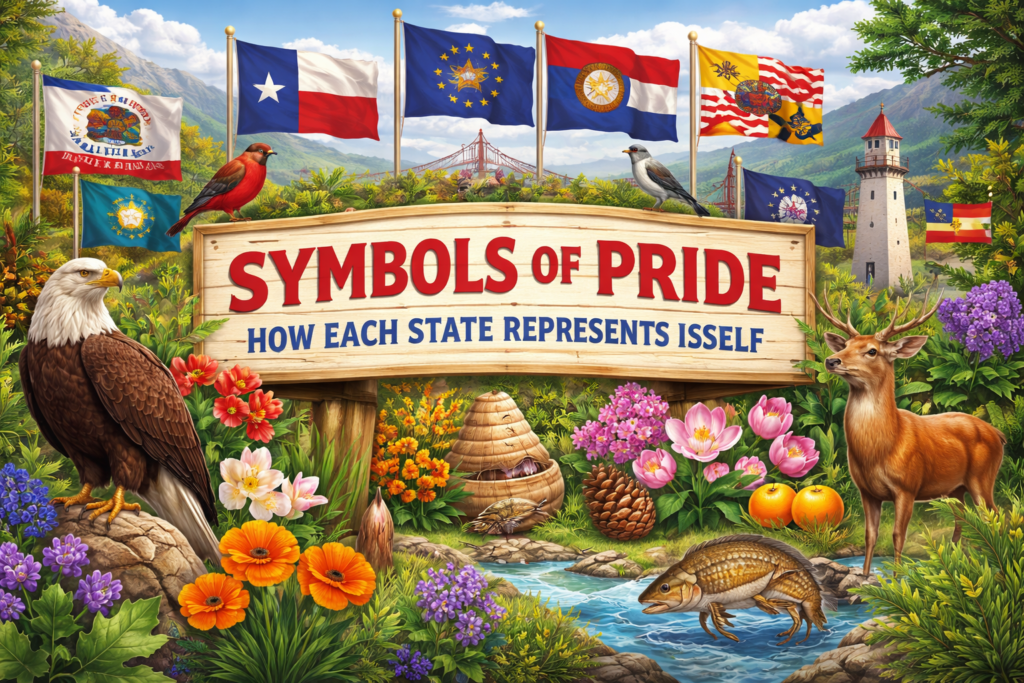
Understanding the Identity Behind State Symbols
Every place has a story, but in the United States, each state tells its story through a unique collection of symbols. These are not random selections. They reflect history, nature, culture, and shared values. From towering trees to delicate flowers, each element has meaning rooted in local identity.
When exploring state symbols by state, you begin to see a vivid mosaic of American diversity. These symbols go beyond decoration. They are expressions of pride, reminders of heritage, and tools for education. Whether it is a state bird soaring across the sky or a motto carved into history, each symbol connects people to their land.
What Are Official State Symbols?
Official state symbols are items chosen by state governments to represent their identity. These symbols are often established through legislation and carry both cultural and historical importance.
Common categories include:
- State flags that display visual identity
- State mottos that express guiding principles
- State nicknames that reflect reputation or history
- State flowers, birds, and trees representing natural heritage
- State emblems that symbolize broader cultural values
These symbols are often taught in schools and celebrated in public events. They help residents understand where they come from and what makes their state unique.
The Role of Nature in State Representation
One of the most fascinating aspects of us state symbols is the strong connection to nature. Many states choose plants and animals that are native or historically significant.
For example, state flowers often bloom abundantly in their regions. State birds are usually species that are commonly seen or hold symbolic meaning. State trees reflect the landscape and environmental importance.
This natural representation serves several purposes:
- It highlights biodiversity and ecological pride
- It encourages conservation awareness
- It creates a sense of belonging among residents
By choosing these elements, states celebrate the beauty and uniqueness of their environments.
State Flags: Visual Identity in Motion
State flags are among the most recognizable official state symbols. They combine colors, shapes, and imagery to create a visual identity that can be displayed anywhere.
Some flags are simple, while others are rich with detail. Many include:
- Historical seals
- Important dates
- Symbols of agriculture or industry
- References to independence or unity
State flags are often seen in government buildings, schools, and public ceremonies. They serve as a constant reminder of identity and pride.
State Mottos: Words That Define Values
State mottos capture the essence of a region in just a few words. They often reflect historical struggles, aspirations, or guiding beliefs.
For instance, some mottos emphasize liberty and freedom, while others highlight perseverance or unity. These short phrases are powerful because they communicate values that resonate across generations.
State mottos are usually found on flags, seals, and official documents, reinforcing their importance in everyday life.
State Nicknames: Stories Behind the Names
State nicknames offer a more informal but equally meaningful way of representation. They often originate from history, geography, or economic activity.
Examples include names inspired by:
- Natural resources
- Agricultural strength
- Historical events
- Cultural characteristics
These nicknames are widely used in media, tourism, and conversation. They create a sense of familiarity and pride, making each state more relatable.
The Significance of State Flowers, Birds, and Trees
Among all categories, state flowers, state birds, and state trees are perhaps the most beloved. They connect people directly to the natural world.
State flowers are often chosen for their beauty and abundance. They may also have historical or cultural significance.
State birds are selected for their visibility and symbolism. Many represent freedom, resilience, or harmony with nature.
State trees reflect the landscape and ecological importance of a region. Some are chosen because they are widely found, while others represent strength and longevity.
Together, these symbols create a living representation of each state’s environment.
State Emblems and Their Deeper Meaning
State emblems go beyond nature and visuals. They often represent broader concepts such as industry, heritage, or innovation.
These emblems may include:
- State seals
- Fossils or minerals
- Cultural artifacts
- Historical symbols
They provide deeper insight into what each state values and how it sees itself. For example, a state with a strong mining history may choose a mineral as its emblem, while another might highlight a historical figure or event.
Why State Symbols Matter in Modern Times
In today’s fast-paced world, it might seem like these symbols are just traditions. However, they continue to play an important role.
They help in:
- Preserving cultural heritage
- Educating younger generations
- Promoting tourism and identity
- Building community pride
When people learn about us state facts through symbols, they gain a better understanding of the country’s diversity. It becomes easier to appreciate how each state contributes to the larger national identity.
Exploring Diversity Through State Symbols
Looking at state symbols by state reveals how different and unique each region is. No two states share the exact same combination of symbols.
Some states highlight coastal life through marine symbols, while others focus on mountains, forests, or deserts. This diversity reflects the vast geography and cultural richness of the United States.
Even within similar categories, the choices vary widely. One state might choose a bright wildflower, while another selects a rare species. These differences make the study of state symbols both interesting and educational.
How State Symbols Influence Culture and Education
State symbols are not just official labels. They actively shape culture and learning.
In schools, students often learn about:
- Their state’s history through symbols
- Environmental awareness through state trees and birds
- Civic pride through flags and mottos
These lessons create a strong foundation for understanding identity and belonging.
In communities, symbols are celebrated through festivals, local events, and public displays. They become part of everyday life, reinforcing their importance.
The Connection Between Symbols and Tourism
State symbols also play a role in attracting visitors. Tourists are often drawn to places that highlight their unique identity.
For example:
- A state flower festival can attract thousands of visitors
- Iconic state flags can become souvenirs
- Natural landmarks linked to state trees or birds can become tourist spots
These symbols help create a memorable image that encourages exploration and appreciation.
A Living Reflection of Identity
State symbols are not static. Over time, they can evolve or expand as states grow and change. New symbols may be added to reflect modern values or discoveries.
This adaptability ensures that official state symbols remain relevant. They continue to represent not just history, but also present identity and future aspirations.
Understanding these symbols offers a deeper connection to each state. It allows people to see beyond maps and statistics, revealing stories, traditions, and values.
The Story Continues Across Every State
Each state in the United States carries its own identity, shaped by history, nature, and culture. Through state flags, state mottos, state nicknames, and natural elements like state flowers, birds, and trees, these identities come to life.
Exploring these symbols is like reading a story that spans the entire nation. Every emblem, every motto, and every nickname adds a new chapter.
By appreciating these symbols, we gain more than just knowledge. We gain a deeper understanding of what makes each state unique and why that uniqueness matters.
