

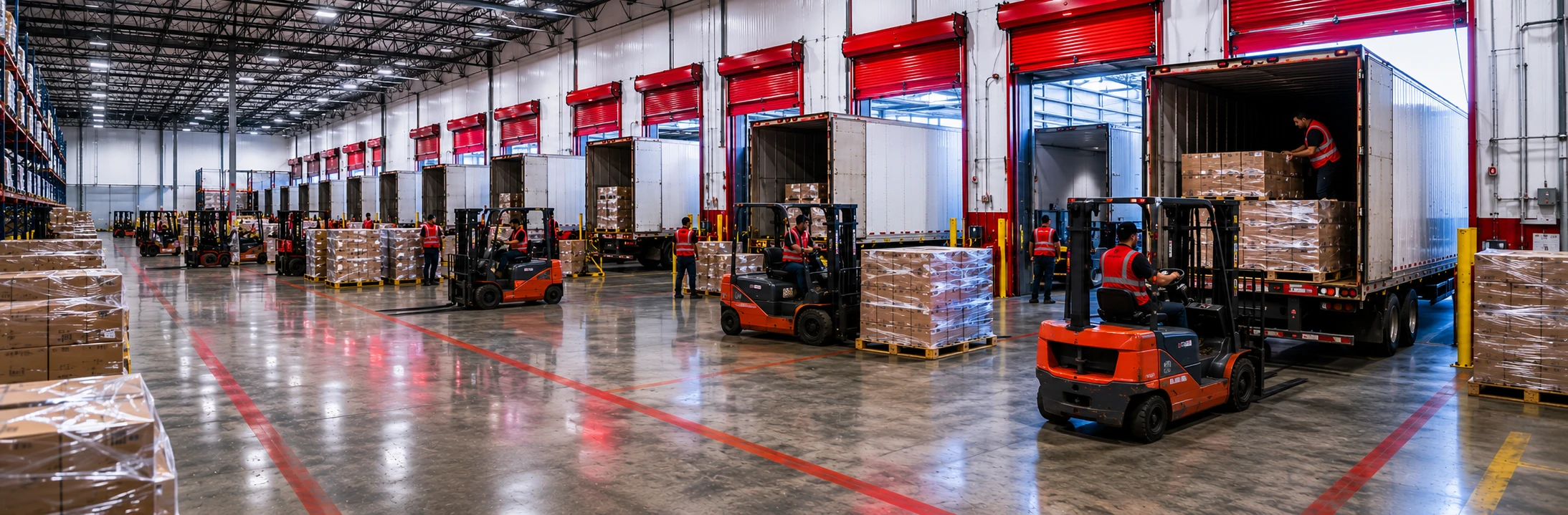
Baltimore Cross Docking helps carriers, brokers, shippers, distributors, and 3PL providers move freight efficiently throughout the Mid-Atlantic region while reducing storage costs and improving delivery performance. As supply chains become increasingly time-sensitive, businesses require solutions that keep freight moving rather than sitting in warehouses.
Strategically located on the East Coast, Baltimore serves as an important transportation hub connecting ports, distribution centers, manufacturers, retailers, and final delivery destinations. Cross docking allows inbound shipments to be transferred directly into outbound transportation with minimal storage time, creating a faster and more efficient supply chain.
Why Cross Docking Continues to Grow
Modern logistics networks depend on speed and flexibility.
Traditional warehousing often creates additional costs through:
• Storage fees
• Additional handling
• Inventory delays
• Increased labor requirements
• Longer delivery timelines
Cross docking eliminates many of these inefficiencies by reducing the amount of time freight remains inside a warehouse.
Instead of storing inventory for days or weeks, shipments can be sorted, transferred, consolidated, or redistributed within hours.
This approach improves freight flow while helping businesses respond more quickly to customer demand.
Why Baltimore Is a Strategic Freight Hub
Baltimore offers direct access to some of the most important transportation corridors in the eastern United States.
Key advantages include:
• Port of Baltimore access
• Interstate 95 connectivity
• Interstate 695 access
• Interstate 70 freight corridors
• Access to Washington, DC
• Access to Philadelphia markets
• Connections to major East Coast distribution networks
Because of these transportation advantages, Baltimore has become a preferred location for cross docking operations supporting regional and national freight movement.
Many companies use Baltimore as a transfer point that allows shipments to move efficiently throughout the Mid-Atlantic region.
How Cross Docking Improves Supply Chain Efficiency
Cross docking creates value by reducing unnecessary inventory handling.
Benefits include:
• Faster freight movement
• Reduced storage costs
• Lower inventory carrying expenses
• Improved delivery performance
• Better shipment visibility
• Increased trailer utilization
• More efficient transportation planning
For businesses moving high volumes of freight, these advantages can significantly improve profitability while enhancing customer service.
Cross docking keeps products moving through the supply chain rather than becoming delayed in storage facilities.
Supporting Freight Consolidation and Distribution
Cross docking often works together with freight consolidation and distribution projects.
Common scenarios include:
• Combining shipments from multiple suppliers
• Breaking down large shipments into smaller deliveries
• Supporting retail distribution networks
• Coordinating multi-stop transportation routes
• Managing inventory redistribution projects
A shipment arriving through the Port of Baltimore may be consolidated with additional freight before outbound transportation is arranged.
This process improves transportation efficiency while reducing overall freight costs.
Industries That Depend on Baltimore Cross Docking
Many industries rely on cross docking to maintain fast-moving supply chains.
Examples include:
• Retail distribution
• Consumer products
• Food and beverage logistics
• Industrial manufacturing
• Medical equipment suppliers
• Automotive distribution
• E-commerce fulfillment
These industries often operate under strict delivery requirements and benefit from reduced storage times and faster freight transfers.
Cross docking helps maintain inventory flow while reducing operational complexity.
Additional Services That Support Cross Docking Operations
Cross docking projects often require additional logistics support.
Common complementary services include:
• Freight Reloading
• Truck-to-Truck Transfers
• Pallet Restacking
• Freight Rework
• Warehouse Rework
• Short-Term Storage
• Freight Consolidation
• Freight Deconsolidation
Combining these services within a single facility reduces delays while simplifying freight coordination.
For example, freight arriving with unstable pallets may require pallet restacking before entering a cross docking operation.
How Freitty Supports Baltimore Cross Docking
Freitty helps transportation companies improve freight flow through professional logistics services designed for modern supply chains.
The Baltimore facility supports:
• Cross Docking
• Freight Consolidation
• Freight Deconsolidation
• Freight Reloading
• Truck-to-Truck Transfers
• Pallet Restacking
• Freight Rework
• Short-Term Storage
The goal is to help businesses reduce delays, improve shipment visibility, and create more efficient transportation networks.
Whether supporting a single truckload transfer or a larger distribution project, professional cross docking services provide measurable operational advantages.
Building More Efficient East Coast Supply Chains
As freight volumes continue to increase throughout the eastern United States, businesses require logistics solutions that support speed, flexibility, and cost control.
Baltimore Cross Docking provides a practical way to accelerate freight movement, improve trailer utilization, reduce storage costs, and support more efficient distribution strategies.
With access to major transportation corridors, proximity to the Port of Baltimore, and support from Freitty, businesses can strengthen supply chain performance while keeping freight moving efficiently across the East Coast.
