

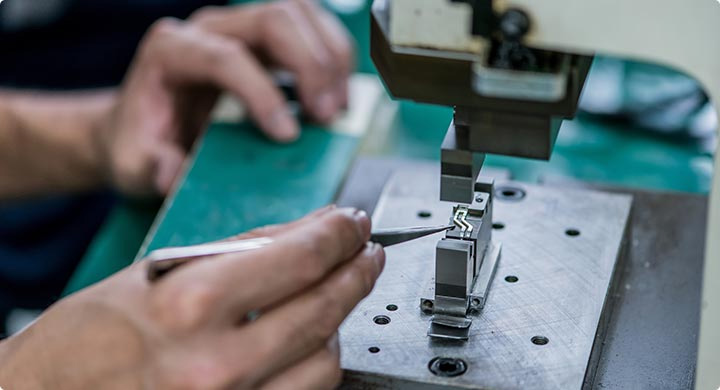
In the world of precision manufacturing, custom metal stamping stands as one of the most versatile and efficient processes for producing high-quality metal components. From automotive parts to medical devices, custom metal stamping enables manufacturers to create complex geometries with exceptional accuracy and repeatability. But what exactly is custom metal stamping, and why is it so widely used across industries?
This comprehensive guide explores the fundamentals of custom metal stamping, including the various processes involved, material selection criteria, tooling considerations, and real-world applications. Whether you are an engineer, designer, or procurement professional, understanding these principles is essential for successful custom metal stamping projects.
What Is Custom Metal Stamping?
Custom metal stamping is a manufacturing process that uses presses and dies to convert flat metal sheets or coils into specific shapes and components. The process involves cutting, bending, forming, or drawing the metal to achieve the desired geometry. Unlike standard stamping, which produces generic parts, custom metal stamping is tailored to meet unique design specifications, making it ideal for specialized applications.
The fundamental concept is straightforward: a metal sheet is fed into a stamping press, where a die applies force to cut or form the material. However, successful custom metal stamping requires a deep understanding of material behavior, tooling design, and process parameters.
Die Design and Tooling Considerations
Tooling is the heart of custom metal stamping. The die determines the shape, tolerances, and surface finish of the stamped part. Designing and fabricating dies for custom metal stamping involves several critical considerations.
Types of Dies
Single-Station Dies perform one operation per press stroke. These are simple and relatively inexpensive, making them suitable for low-volume custom metal stamping projects.
Progressive Dies perform multiple operations in a single press stroke as the material moves through successive stations. Progressive dies are efficient for complex parts and high-volume custom metal stamping.
Transfer Dies move the workpiece from one station to another using mechanical transfer systems. These dies are used for larger parts that cannot be easily handled in a progressive die for custom metal stamping.
Compound Dies combine multiple operations, such as blanking and piercing, in a single stroke. These dies are efficient for simple parts in custom metal stamping.
Tooling Strategies
Soft Tooling uses materials like aluminum, mild steel, or kirksite that are faster and cheaper to produce. Soft tooling is ideal for low-volume custom metal stamping and iterative designs.
Hardened Tooling uses hardened tool steels designed for durability and longevity. This tooling is more expensive but necessary for high-volume custom metal stamping.
Rapid Tooling techniques, such as 3D printing of die components, enable faster turnaround for custom metal stamping projects.
Die Design Considerations
Clearance between the punch and die is critical in custom metal stamping. Too much clearance causes burrs and poor edge quality; too little clearance increases tool wear and press forces.
Radius at corners reduces stress concentrations and improves formability. Sharp corners in custom metal stamping can cause cracking or premature tool wear.
Draft Angles facilitate part removal from the die. In custom metal stamping, draft angles should be specified to avoid binding and improve production efficiency.
Springback Compensation involves adjusting the die geometry to account for springback in custom metal stamping. This is typically done through over-bending or adding coining features.
Tolerances and Surface Finish in Custom Metal Stamping
Achieving precise tolerances is one of the primary goals in custom metal stamping. Tolerances depend on the material, process, and tooling quality.
Standard Tolerances for custom metal stamping typically range from ±0.005 inches (±0.127 mm) for flat features to ±0.010 inches (±0.254 mm) for formed features.
Precision Tolerances of ±0.001 inches (±0.025 mm) or tighter are possible in custom metal stamping but require high-quality tooling, strict process control, and premium materials.
Geometric Tolerances such as flatness, roundness, and parallelism ensure that the custom metal stamping part functions correctly in assembly.
Surface Finish ranges from as-stamped finishes for functional parts to polished or coated finishes for aesthetic or high-performance applications in custom metal stamping.
Applications of Custom Metal Stamping
Custom metal stamping is used across virtually every industry. Common applications include:
Automotive components such as brackets, chassis parts, engine components, and structural reinforcements benefit from custom metal stamping due to its efficiency and precision.
Aerospace parts including structural brackets, housings, and fasteners rely on custom metal stamping for lightweight, high-strength components.
Medical Devices such as surgical instruments, implant components, and diagnostic equipment housings require the precision and cleanliness of custom metal stamping.
Electronics components including connectors, shielding, and heat sinks are produced through custom metal stamping for their accuracy and conductivity.
Consumer Goods like appliance parts, hardware, and decorative components are manufactured through custom metal stamping for cost-effectiveness and consistency.
Quality Control in Custom Metal Stamping
Quality control is essential for custom metal stamping projects. Key methods include:
First Article Inspection (FAI) verifies that the first custom metal stamping part meets all specifications.
In-Process Inspection catches deviations early in custom metal stamping, preventing non-conforming parts.
CMM and Optical Inspection provide accurate dimensional data for custom metal stamping parts.
Material Verification ensures that the correct material is used in custom metal stamping.
Conclusion
Custom metal stamping is a sophisticated manufacturing process that enables the production of high-quality metal components with exceptional precision and efficiency. By understanding the range of stamping processes, material selection criteria, tooling considerations, and quality control requirements, manufacturers can leverage custom metal stamping to bring innovative products to market.
The versatility of custom metal stamping makes it indispensable across industries. From automotive to aerospace, medical to electronics, custom metal stamping delivers the accuracy, repeatability, and cost-effectiveness that modern manufacturing demands.
Investing time in understanding the intricacies of custom metal stamping will pay dividends in reduced development costs, faster time to market, and superior product quality.
