

The development of skin-brightening products has moved beyond selecting an ingredient solely for its ability to inhibit tyrosinase. Cosmetic formulators increasingly consider pigmentation pathways, ingredient stability, skin tolerance and the performance of the finished formulation.
Glabridin and tranexamic acid illustrate two different approaches to addressing uneven skin tone.
Glabridin: A Licorice-Derived Brightening Ingredient
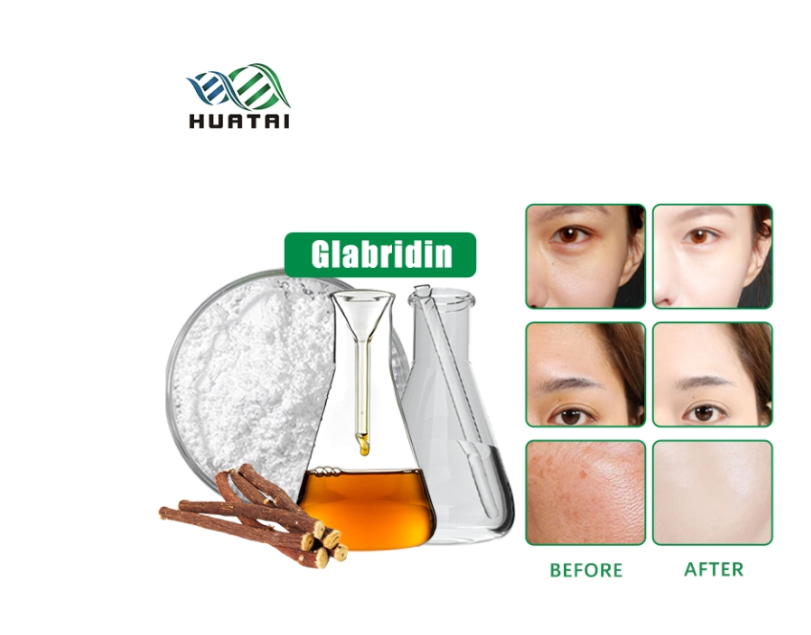
Glabridin is an active compound extracted from licorice root (Glycyrrhiza glabra). It has attracted interest in cosmetic research because of its effects on tyrosinase activity and other biological processes associated with pigmentation.
Its antioxidant and anti-inflammatory activities are also relevant to formulations intended to improve the appearance of uneven skin tone.
However, glabridin presents a practical formulation challenge: its limited water solubility.
The choice of raw material grade and incorporation method can influence its distribution and stability in the finished product. Formulators developing aqueous serums, emulsions and oil-based products should therefore consider the physical characteristics of the selected ingredient.
Different Glabridin cosmetic ingredient grades can help manufacturers accommodate different formulation requirements.
Tranexamic Acid: An Alternative Pigmentation Pathway
Tranexamic acid approaches pigmentation through a different mechanism.
Research into topical tranexamic acid has focused on its effects on the plasminogen/plasmin pathway and its potential to reduce UV-associated pigmentation.
Unlike glabridin, tranexamic acid is water-soluble, making it a practical candidate for certain aqueous skincare formulations.
Its concentration, formulation pH and compatibility with other ingredients remain important development considerations. Clinical research has investigated topical concentrations ranging from approximately 2% to 10%, although these are study conditions rather than universal cosmetic recommendations.
For cosmetic manufacturers developing brightening serums, Tranexamic Acid offers another formulation option.
Selecting Ingredients for a Brightening Formula
Glabridin and tranexamic acid should not be treated as interchangeable ingredients.
Their different physicochemical properties and biological activities influence formulation design. When used together, their compatibility, stability and performance require evaluation in the intended formulation.
For ingredient buyers, technical documentation is equally important. Specifications, analytical methods, stability information and formulation guidance help R&D teams determine whether a particular raw material is appropriate for their project.
The effectiveness of a brightening product ultimately depends on the complete formulation rather than the reputation of any individual active ingredient.
