
I used to think a bio was just a few lines under a profile picture. A short intro, maybe a favorite quote, a few symbols, and that was enough. In practice, though, I kept noticing the same problem on social platforms: the text and the visual identity rarely felt like they belonged together. Someone would have a beautifully styled bio, but the profile image looked random. Or the avatar looked polished, while the bio felt flat and generic.
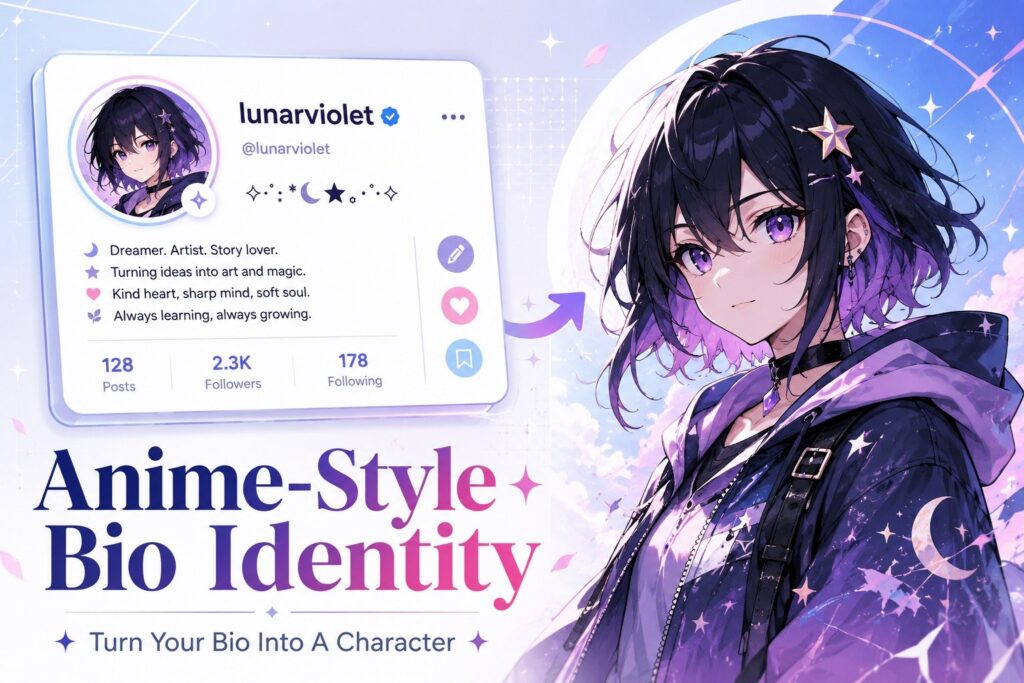
That disconnect is what pushed me to experiment more seriously with character-based profiles. Over time, I found that a profile becomes much more memorable when the bio, the symbols, and the image all support the same identity. In that process, using an AI OC maker helped me move from vague personality ideas to a more complete visual concept that actually matched the tone of my profile.
A Good Bio Feels Better When It Has A Face
What surprised me most was how quickly a profile starts to feel stronger once there is a clear character behind it. I do not mean a fake persona in the dramatic sense. I mean something more practical: a visual identity that reflects the mood you are already trying to express.
When I looked at profiles that stuck in my mind, they usually had three things working together:
- a consistent tone
- a recognizable profile image
- a short bio that reinforced the same vibe
That could be soft and dreamy, sharp and confident, playful and chaotic, or quiet and mysterious. The point is not to look “perfect.” The point is to look intentional.
A plain selfie can work, of course. Still, I found that anime-style character visuals often give people more room to express taste, mood, and personality without feeling overexposed. That matters on platforms where people want self-expression, but not necessarily full realism.
Why Anime-Style Profiles Work So Well
There is a reason anime-inspired identities keep showing up across TikTok, Discord, Instagram, gaming communities, and fan spaces. They compress a lot of personality into a small frame.
A good anime-style profile image can communicate:
- mood through color
- confidence through pose
- softness through facial expression
- attitude through styling
- identity through recurring visual details
It is also easier to build a “character impression” around an illustrated identity than around a random cropped photo. I noticed this especially on accounts that use decorative symbols, stylized usernames, and short bios. Once the avatar carries the same emotional tone, the whole profile feels more complete.
Here is the framework I now use when thinking about profile identity:
| Profile Element | What It Should Express |
| Username | Tone or persona |
| Bio text | Core personality or mood |
| Symbols / emojis | Texture and style |
| Avatar | Visual identity |
| Color choices | Emotional consistency |
The biggest mistake is treating these as separate pieces. They work better as a set.
I Start With Personality, Not Clothing
When people try to build a character identity for a profile, they often jump straight into outfit ideas, hair color, or accessories. I used to do that too. It looked creative at first, but the result often felt decorative rather than personal.
What worked better for me was starting with a few personality cues. I would ask simple questions:
- Is this profile warm or distant?
- Does it feel playful, romantic, bold, or reserved?
- Is the energy closer to fantasy, city-pop, school-life, or gaming culture?
- Should the character look approachable or slightly mysterious?
Once those answers are clear, visual decisions become easier. A softer bio tone naturally pairs with lighter palettes, gentler expressions, and simpler lines. A darker or more self-possessed tone may call for stronger contrast, cleaner shapes, and more defined styling.
In other words, the look should come from the vibe, not the other way around.
The Bio And The Avatar Should Not Compete
This is one of those small observations that makes a huge difference. A lot of profiles fail because the bio and avatar seem to argue with each other.
I have seen profiles with cute, delicate bios paired with aggressive cyberpunk avatars. I have also seen dark, poetic bios paired with bright, bubbly images that weaken the mood instead of supporting it. Neither is “wrong,” but the profile becomes harder to read.
When I want the whole profile to feel coherent, I check for alignment in a few areas:
- Does the avatar match the emotional tone of the bio?
- Do the symbols feel like part of the same visual language?
- Does the name style fit the image?
- If someone sees the profile for two seconds, do they get one clear impression?
That two-second test matters more than people think. Most visitors are not studying a profile. They are scanning it. If the impression is clean, the profile feels more memorable.
Turning A Real Photo Into An Anime Version Helped Me More Than Starting From Zero
Not everyone wants a fully invented OC, and honestly, I understand that. Sometimes I do not want to create a character that feels completely separate from me. I want something closer to a stylized version of my real features.
That is where a photo to anime converter becomes especially useful. What I like about this route is that it keeps some personal familiarity—hair shape, face angle, general expression—while still giving the profile a cleaner and more distinctive illustrated look.
In my experience, this works especially well for:
- social media avatars
- creator profiles
- fan accounts
- gaming profiles
- casual rebrands when you want a fresh look without losing identity
It also solves a practical issue. A real photo can be visually messy when reduced to avatar size. An anime-style version usually reads more clearly in a small circle or square, which matters much more than people expect.
Prompt Ideas I Keep Coming Back To
Even when I am not using a real photo as the starting point, I still prefer prompts that are specific enough to guide the mood without becoming overstuffed. The best prompts I have used tend to describe mood, expression, and context, not just surface traits.
Here are a few styles I find effective:
- soft anime profile portrait, warm lighting, gentle expression, pastel color palette, clean background
- confident anime character, city-night atmosphere, subtle streetwear details, calm gaze, polished profile image
- dreamy fantasy anime avatar, elegant outfit, glowing accents, quiet and mysterious mood
- cozy anime portrait, natural smile, soft cardigan, simple background, friendly and approachable vibe
The more useful question is not “How detailed should the prompt be?” It is “What should the viewer feel in one glance?” Once I started thinking that way, the outputs became much more usable.
Common Mistakes That Make A Profile Feel Random
After trying different profile formats for myself and reviewing a lot of public profiles, I keep seeing the same patterns.
One is over-design. People pile on too many symbols, effects, colors, and styling choices. The result feels crowded rather than distinctive.
Another is weak focal identity. The avatar may be attractive, but it does not say anything clear. It becomes just another image, not a recognisable profile.
A third issue is inconsistency across platforms. If the Instagram profile looks soft and poetic, but the Discord identity is chaotic and the TikTok profile looks corporate, people do not retain one stable impression. That is not always a problem, but if someone is trying to build a recognizable online presence, consistency helps.
Here is a quick summary:
| Mistake | What Happens |
| Too many symbols | The bio becomes noisy |
| No clear tone | The profile feels generic |
| Mismatched avatar and bio | The identity feels fragmented |
| Overcomplicated image | Small-size readability drops |
| Different style on every platform | Recognition weakens |
What I Learned From Reworking My Own Profiles
The biggest change for me was realizing that a good bio is not just text decoration. It is part of a profile system. Once I started treating profile identity as something visual as well as verbal, I made better choices.
I became more selective about symbols. I wrote shorter bios. I stopped choosing avatars just because they looked pretty in isolation. Instead, I asked whether they strengthened the story the profile was already telling.
That shift made everything feel easier. The profile did not need more information. It needed more unity.
Final Thoughts
If a profile already has personality in the writing, it deserves the same care in the visual layer. That does not mean everyone needs to become a designer or build a complicated character world. It simply means the image, the bio, and the tone should support each other.
From what I have seen, the most memorable profiles are rarely the loudest ones. They are the ones where everything feels connected. A short bio, a few thoughtful symbols, and a clear anime-style identity can do far more than a long introduction ever will.
If I had to sum it up simply, I would say this: people remember profiles that feel like a person, not profiles that feel like a template.
