

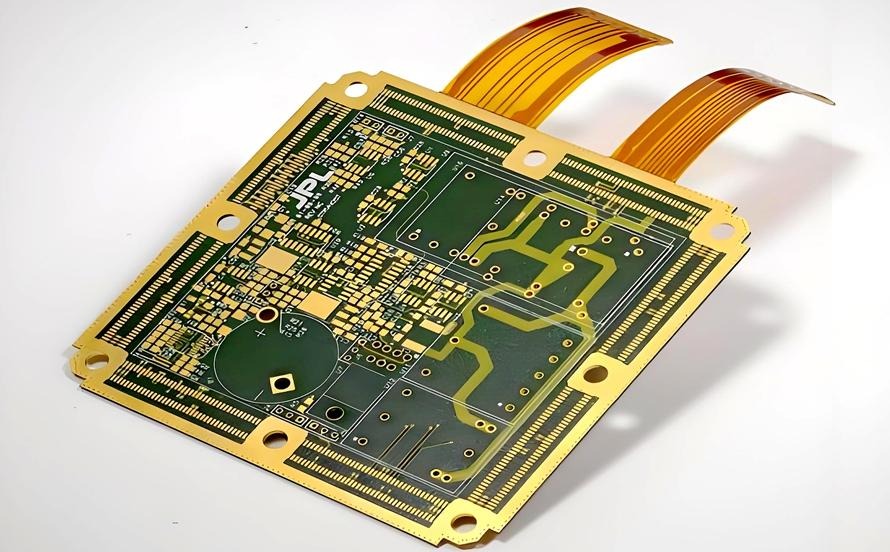
The electronics industry continues to push the boundaries of innovation by developing products that are smaller, lighter, and more powerful than ever before. Modern devices require circuit board technologies capable of delivering exceptional electrical performance while fitting into increasingly compact and complex mechanical designs. Traditional rigid printed circuit boards and standalone flexible circuits often cannot meet these demanding requirements on their own. As a result, the Rigid Flex PCB has become one of the most important technologies in advanced electronics manufacturing.
A rigid-flex PCB combines the structural stability of rigid circuit boards with the flexibility of flexible printed circuits in a single integrated assembly. This hybrid design eliminates the need for multiple connectors and wiring harnesses while improving reliability, reducing weight, and simplifying product assembly. From aerospace and medical devices to automotive systems, military electronics, and consumer products, rigid-flex technology has become the preferred solution for applications requiring both durability and design flexibility.
As demand for sophisticated electronic products grows, manufacturers increasingly depend on experienced Rigid-flex PCB Suppliers that possess the engineering expertise, advanced production equipment, and strict quality control systems necessary to manufacture these highly specialized circuit boards.
This article explores rigid-flex PCB technology, its manufacturing process, applications, advantages, and the importance of selecting the right supplier for long-term product success.
What Is a Rigid Flex PCB?
A Rigid Flex PCB is a printed circuit board that combines rigid PCB sections with flexible circuit layers into a single interconnected structure. Instead of connecting separate rigid boards using cables or connectors, flexible circuits are permanently integrated during manufacturing, creating a unified electronic assembly.
The rigid portions provide stable mounting areas for electronic components, while the flexible sections allow the board to bend or fold to accommodate complex product designs. Because the flexible circuits are built directly into the board structure, electrical connections remain highly reliable even under continuous vibration or mechanical movement.
Rigid-flex technology enables engineers to create compact products with improved mechanical performance while reducing the number of individual components required during assembly.
How Rigid Flex PCBs Differ from Traditional PCB Designs
Traditional electronic assemblies typically consist of multiple rigid circuit boards connected using cables, connectors, or wire harnesses. While this approach works well for many applications, it increases assembly complexity and introduces additional connection points that may fail over time.
A rigid-flex PCB integrates both rigid and flexible sections into one continuous circuit, eliminating many of these interconnections. The flexible layers replace traditional cables while maintaining reliable electrical continuity throughout the product.
This integrated design not only saves valuable internal space but also improves signal integrity by shortening electrical pathways. The reduction in connectors further minimizes potential failure points while simplifying product assembly and maintenance.
As electronic devices become increasingly compact, rigid-flex technology provides engineers with significantly greater design freedom than conventional PCB assemblies.
The Manufacturing Process of Rigid Flex PCBs
Manufacturing a rigid-flex PCB is considerably more complex than producing either a rigid or flexible circuit board alone. The process begins after engineers finalize the PCB layout and define the rigid and flexible regions within the board structure.
Specialized materials are selected based on the electrical, thermal, and mechanical requirements of the application. Flexible sections are typically manufactured using polyimide substrates, while rigid portions utilize conventional FR-4 laminates or other specialized materials.
Copper layers are patterned using advanced imaging and chemical etching processes before multiple rigid and flexible layers are carefully laminated together. Precise alignment is essential because even slight registration errors can affect electrical performance and mechanical flexibility.
Laser drilling and mechanical drilling create vias that establish electrical connections between layers. These vias are plated with copper before the board undergoes additional lamination cycles if required by the design.
After fabrication, solder mask, coverlay materials, surface finishes, and silkscreen markings are applied according to the product specifications. Each board then undergoes extensive electrical testing, dimensional verification, and mechanical inspection before shipment.
Because rigid-flex manufacturing combines multiple advanced PCB technologies within a single product, maintaining strict process control throughout production is critical.
Advantages of Rigid Flex PCB Technology
One of the most significant advantages of rigid-flex technology is its ability to reduce product size while increasing design flexibility. By eliminating separate cables and connectors, engineers can create highly compact electronic assemblies suitable for products with limited internal space.
Mechanical reliability is another important benefit. Traditional cable connections are often vulnerable to vibration, movement, and repeated mechanical stress. Integrated flexible circuits significantly improve durability because they eliminate many of these potential failure points.
Rigid-flex PCBs also contribute to lower overall system weight. The elimination of connectors, wiring harnesses, and additional mounting hardware reduces material usage, making rigid-flex technology particularly valuable in aerospace, defense, medical, and portable electronic products.
Signal integrity is further enhanced because electrical pathways become shorter and more direct. Reduced connector interfaces help minimize signal loss, electromagnetic interference, and electrical resistance.
Although rigid-flex boards generally require higher initial manufacturing costs than standard rigid PCBs, they often reduce overall product costs by simplifying assembly, improving reliability, and minimizing maintenance requirements throughout the product lifecycle.
Applications of Rigid Flex PCBs
Rigid-flex PCBs are widely used in industries where reliability, compact design, and mechanical durability are essential. Consumer electronics manufacturers utilize rigid-flex technology in smartphones, foldable devices, digital cameras, wearable electronics, virtual reality equipment, and advanced computing products.
Medical device manufacturers depend on rigid-flex circuits for portable diagnostic instruments, implantable devices, surgical equipment, patient monitoring systems, and imaging technologies. Their compact size and long-term reliability make them particularly valuable for healthcare applications.
The aerospace and defense industries rely heavily on rigid-flex boards because reducing weight while improving reliability is critical for aircraft, satellites, navigation systems, communication equipment, and military electronics operating under harsh environmental conditions.
Automotive manufacturers use rigid-flex technology in advanced driver assistance systems, infotainment units, electronic dashboards, battery management systems, lighting controls, and autonomous driving platforms where vibration resistance is essential.
Industrial automation systems, robotics, telecommunications infrastructure, renewable energy equipment, and Internet of Things (IoT) devices also benefit from the flexibility and reliability offered by rigid-flex PCB technology.
Why Choosing Experienced Rigid-Flex PCB Suppliers Matters
Manufacturing rigid-flex circuit boards requires significantly greater expertise than conventional PCB fabrication. Experienced Rigid-flex PCB Suppliers possess specialized engineering knowledge, advanced production capabilities, and extensive quality control procedures that ensure reliable manufacturing results.
Professional suppliers begin every project with a comprehensive Design for Manufacturability (DFM) review. This engineering analysis helps identify potential challenges related to bend radius, material selection, layer stack-up, via placement, and mechanical stress before production begins.
Experienced suppliers also invest in advanced manufacturing equipment capable of producing laser-drilled microvias, fine-line circuitry, controlled impedance structures, multilayer rigid-flex assemblies, and high-density interconnect designs. These capabilities are essential for supporting today’s increasingly sophisticated electronic products.
Working with knowledgeable suppliers also provides valuable technical support during prototype development, design optimization, and production scaling, helping customers reduce development time while improving product reliability.
Quality Assurance in Rigid Flex PCB Manufacturing
Quality control is particularly important for rigid-flex circuit boards because they must maintain both electrical performance and mechanical flexibility throughout their service life. Manufacturers implement comprehensive inspection procedures at every stage of production to ensure consistent product quality.
Material verification ensures that substrates, adhesives, copper foils, and coverlay materials meet performance requirements before fabrication begins. Throughout production, manufacturers monitor layer alignment, copper plating quality, drilling accuracy, and lamination consistency.
Automated Optical Inspection (AOI) verifies circuit integrity, while X-ray inspection confirms the quality of hidden interconnections and multilayer structures. Electrical testing ensures circuit continuity, insulation performance, and impedance control before shipment.
Many manufacturers also perform bend testing, thermal cycling, environmental testing, and vibration analysis to evaluate long-term durability under actual operating conditions.
International certifications such as ISO 9001, IPC standards, UL certification, IATF 16949 for automotive electronics, ISO 13485 for medical devices, and RoHS compliance further demonstrate a supplier’s commitment to manufacturing excellence.
Future Trends in Rigid Flex PCB Technology
The demand for rigid-flex PCB technology continues to grow as electronic products become increasingly compact and feature-rich. Emerging technologies such as foldable smartphones, wearable healthcare devices, electric vehicles, autonomous systems, advanced robotics, artificial intelligence hardware, and aerospace innovations are creating new opportunities for rigid-flex applications.
Manufacturers are investing in precision automation, laser direct imaging, advanced flexible materials, embedded component technology, and intelligent manufacturing systems to improve production efficiency while supporting increasingly complex circuit designs.
Advancements in material science and manufacturing automation will continue expanding the capabilities of rigid-flex PCBs, enabling engineers to create smaller, lighter, and more reliable electronic products for future generations.
Conclusion
The Rigid Flex PCB has become an essential technology for modern electronics by combining the structural strength of rigid boards with the versatility of flexible circuits. This innovative design improves reliability, reduces product size, enhances signal integrity, and simplifies assembly across a wide range of industries, including medical, aerospace, automotive, industrial automation, and consumer electronics.
Partnering with experienced Rigid-flex PCB Suppliers ensures access to advanced manufacturing technologies, specialized engineering support, rigorous quality assurance, and reliable production capabilities. As electronic products continue to evolve toward greater miniaturization and higher performance, rigid-flex PCB technology will remain a critical foundation for developing the next generation of innovative electronic devices.
