

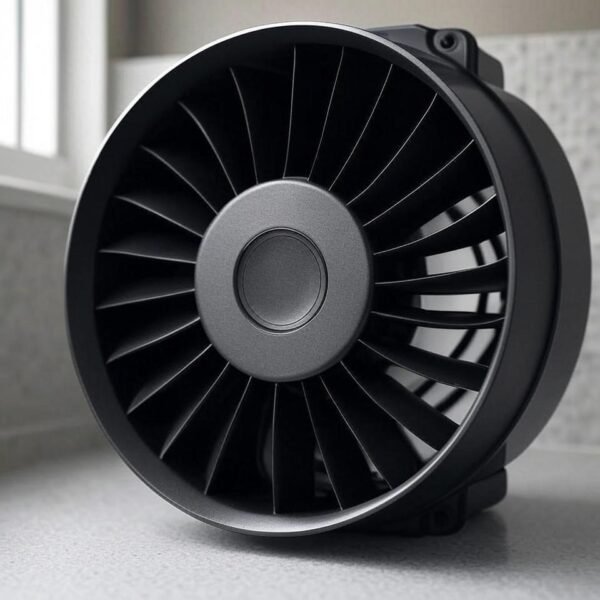
Maintaining a pleasant and healthy interior environment requires adequate ventilation. Choosing the correct ventilation fan is essential whether you’re building a business space, renovating a workshop, or just increasing the circulation in your house. The correct decision guarantees effective air circulation, gets rid of smells, and keeps humidity and temperature at ideal levels. However, it might be difficult to choose the ideal fan since there are so many different models and varieties available. Everything you need to make an educated choice is broken down in this guide.
Realising The Value Of Ventilation Fans
The purpose of ventilation fans is to effectively flow air into and out of a place. They aid in the introduction of fresh air while removing pollutants, stale air, and surplus moisture. In enclosed spaces, pollutants and humidity may build up without enough ventilation, resulting in poor indoor air quality and structural problems like mould and corrosion. A ventilation fan is also essential for controlling temperature and preserving a secure working environment in commercial and industrial environments.
Different Types Of Fans For Ventilation
Fans of various kinds are needed in diverse settings, and each has a distinct function. These are the most prevalent kinds:
1. Exhaust Fans: These are perfect for drawing air out of confined spaces like toilets, kitchens, and workshops. Usually installed on the wall or ceiling, exhaust fans remove surplus air outside.
2. Inline Fans: Often used for bigger ventilation networks, inline fans are put within duct systems. They are ideal for big offices and industrial establishments because they provide steady airflow throughout a number of spaces or lengthy duct lengths.
3. Centrifugal Fans: These work well in systems with resistance or lengthy ducts because they employ revolving impellers to circulate air at high pressure. They are often seen in labs or industrial facilities where robust air circulation is necessary.
4. Axial Fans: Usually used for general ventilation, axial fans circulate air in a straight path. They work well, are portable, and are perfect for places that need a lot of airflow at low pressure.
5. Roof And Wall Fans: To maintain consistent air circulation in smaller spaces, wall-mounted fans are used, but roof-mounted fans are best suited for big commercial buildings. Both solutions are designed to effectively remove heated or contaminated air from interior spaces.
Important Things To Think About Before Buying
To guarantee performance and efficiency, take into account the following elements while selecting a ventilation fan:
1. The Size Of The Room And Its Airflow Capacity
The cubic feet per minute (CFM) unit is used to measure a ventilation fan’s capacity. You’ll need a greater CFM rate in bigger spaces. Multiply the volume of the room by the number of air changes per hour needed to get the optimal CFM.
2. Noise Level
Fans have the potential to produce noise that might be bothersome in homes or workplaces. For bedrooms and conference rooms in particular, look for fans with low noise ratings or those designed to run quietly.
3. The Efficiency Of Energy
To save power, choose a fan with high-performance blades and an energy-efficient engine. Energy-certified models reduce utility costs without sacrificing functionality.
4. Mode Of Installation
The fan’s efficacy is dependent on where it is placed. For instance, wall-mounted and roof-mounted fans are suitable for industrial or warehouse settings, whereas ceiling-mounted fans are best suited for bathrooms and kitchens. The exhaust exit of the fan should always be properly vented outside.
5. Sturdiness And Maintenance
Choose a ventilation fan constructed of sturdy materials like aluminium or galvanised steel for heavy-duty or industrial applications. They need minimal upkeep and can survive severe environments. The fan’s lifetime is further increased by regular cleaning and examination.
Conclusion
Matching the fan to your unique area and airflow requirements is more important when choosing a ventilation fan than just choosing the most potent type. The proper fan improves comfort, safety, and energy economy, whether it is used in a home or an industrial environment. Examine your surroundings, think about the technical details, and spend money on a reputable model that will provide dependable performance for many years to come. Better living and working environments need proper ventilation, which is more than simply an update.
