

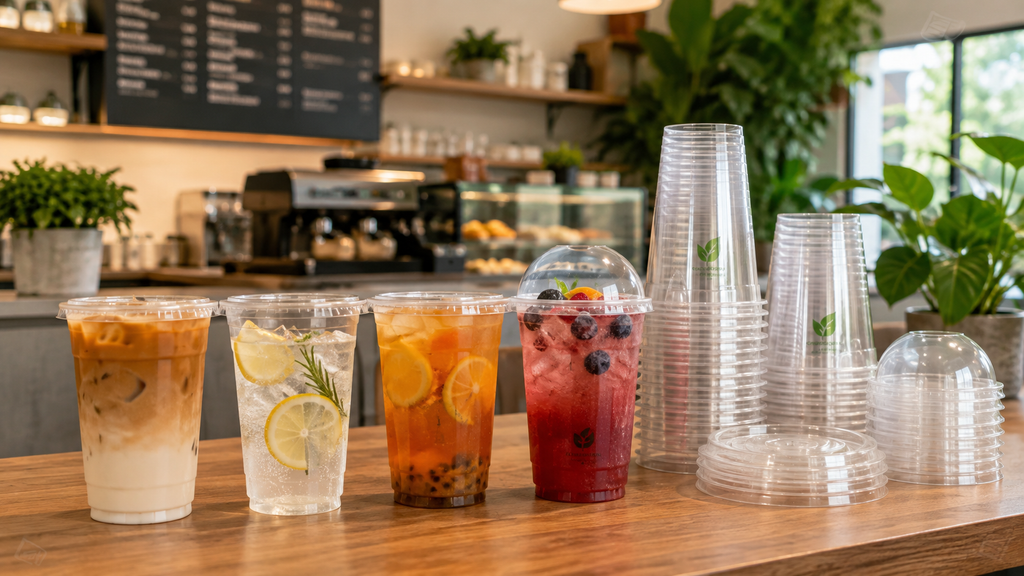
Disposable cold drink cups may seem like a minor purchasing item, but for cafés, beverage chains, restaurants, hotels, distributors, and event operators, they affect branding, service speed, logistics, customer experience, and sustainability goals.
As iced coffee, bubble tea, smoothies, fruit tea, and takeaway beverages continue to grow in popularity, businesses are purchasing larger volumes of transparent cups than ever before. At the same time, many buyers are exploring alternatives to conventional petroleum-based plastics.
This has increased global demand for PLA and other compostable foodservice products.
China has become an important sourcing market for these products because manufacturers can offer broad size ranges, custom printing, compatible lids, certification support, and large-scale production.
However, buying compostable cups internationally requires more than comparing prices. Material performance, temperature limits, certification, minimum order quantities, logistics, storage, and local waste infrastructure all need to be considered.
Why Clear Cups Still Matter
Modern beverages are designed to be seen.
An iced latte shows the contrast between coffee and milk. Fruit tea may include citrus slices, berries, herbs, and colorful syrups. Bubble tea relies on visible tapioca pearls, jelly, foam, or fruit.
Transparent packaging allows those ingredients to become part of the presentation.
This matters because customers increasingly photograph drinks for social media. A colorful beverage inside a clear branded cup can appear on Instagram, TikTok, review platforms, and messaging apps within minutes of purchase.
For beverage businesses, the cup is therefore more than a container.
It is also part of the visual identity of the product.
Why Compostable Cold Cups Are Attracting Buyers
One of the most widely used materials for transparent compostable cold cups is PLA, or polylactic acid.
PLA is a bio-based polymer commonly produced using renewable plant-derived feedstocks. It can provide the transparent appearance expected from conventional cold-drink cups while offering a different material and end-of-life pathway.
International buyers researching manufacturers such as Bioleader – compostable plastic cups from China are often looking for more than a single cup model. They may need several capacities, matching lids, custom printing, export packaging, documentation, and the ability to consolidate different products into commercial shipments.
That makes supplier selection especially important.
A compostable cup must work operationally first. Sustainability claims are only useful when the product also performs correctly during storage, filling, takeaway service, and transportation.
PLA Is Mainly Intended for Cold Drinks
PLA cups should not be treated as universal replacements for every disposable cup.
Standard transparent PLA cups are primarily designed for cold beverage applications.
Typical uses include:
- iced coffee;
- cold brew;
- fruit tea;
- bubble tea;
- fresh juice;
- smoothies;
- lemonade;
- iced matcha;
- milk tea;
- sparkling beverages; and
- chilled desserts.
Heat is an important limitation.
Businesses should always confirm the recommended temperature range before selecting PLA packaging.
Using a cold-service cup for a hot beverage may cause deformation or poor performance.
This is why professional buyers should start with the application rather than the material name.
What “Compostable” Really Means
The word compostable is often misunderstood.
It does not mean that a cup will instantly disappear after being thrown into general waste, soil, or the natural environment.
Certified compostable packaging is designed to break down under defined conditions.
For many PLA products, those conditions may involve industrial composting facilities with controlled temperature, moisture, oxygen, and processing time.
Before introducing compostable cups, businesses should therefore consider:
- available composting infrastructure;
- local collection systems;
- applicable certification standards;
- customer disposal behavior;
- labeling requirements; and
- destination-market regulations.
A compostable material only becomes part of an effective waste strategy when the surrounding system can manage it correctly.
Why Businesses Source Cups From China
China has developed a large manufacturing base for disposable foodservice packaging.
For commercial buyers, several factors can make sourcing attractive.
Broad Product Ranges
Manufacturers may offer multiple capacities within the same product family.
Common cold-cup sizes include:
- 8 oz;
- 9 oz;
- 10 oz;
- 12 oz;
- 14 oz;
- 16 oz;
- 20 oz; and
- 24 oz.
This allows distributors and beverage chains to build a coordinated cup range rather than purchasing unrelated products from several sources.
Multiple Lid Options
Cold cups may require:
- flat lids;
- dome lids;
- straw-slot lids; or
- sip-style lids.
A manufacturer able to supply the complete cup-and-lid system can simplify procurement.
Custom Printing
Large commercial orders may include custom logos, brand colors, QR codes, or promotional artwork.
Export Experience
Experienced suppliers can provide carton dimensions, packing quantities, cubic volume, shipping documents, and export support.
These details become increasingly important as purchasing volume grows.
Cup Diameter Can Be More Important Than Cup Capacity
Buyers often start by asking for 12oz, 16oz, or 24oz cups.
But another specification can be equally important:
rim diameter.
The top diameter determines which lid fits.
If several cup sizes share the same rim, businesses may be able to use one lid family across multiple capacities.
For example, a beverage operator using 12oz, 16oz, and 24oz cups may be able to simplify inventory if all three belong to the same compatible system.
That can reduce:
- warehouse space;
- ordering complexity;
- staff errors;
- mismatched lids;
- inventory counting time; and
- leftover stock.
For multi-location beverage brands, this type of standardization can create significant operational savings.
Choose the Cup Around the Drink
Packaging should follow the menu.
A café should consider:
- actual beverage volume;
- amount of ice;
- fruit pieces;
- toppings;
- foam;
- straw requirements;
- takeaway duration; and
- customer expectations.
A 12oz cup may work well for a small iced coffee or juice.
A 16oz cup may be better for an iced latte, fruit tea, or smoothie.
A 20oz or 24oz format may be needed for bubble tea or beverages with significant amounts of ice and toppings.
The nominal liquid volume alone does not tell the whole story.
Businesses should test complete drinks before committing to a cup size.
Custom Printing Adds Marketing Value
Takeaway packaging moves beyond the restaurant.
Customers carry drinks through:
- offices;
- shopping centres;
- universities;
- airports;
- public transport;
- parks;
- exhibitions; and
- city streets.
This gives printed cups an advertising role.
A simple logo can turn a transparent cup into a recognizable brand asset.
Possible printing elements include:
- logos;
- social-media handles;
- QR codes;
- brand colors;
- seasonal graphics;
- promotional messages; and
- disposal instructions.
Complex artwork is not always necessary.
For colorful beverages, minimal printing often works best because the drink itself provides much of the visual interest.
Social Media Makes Cup Design More Valuable
Beverage businesses increasingly rely on customer-generated photographs.
A visually appealing drink may be shared online without any direct marketing effort from the brand.
If the logo is visible, the cup becomes part of that exposure.
This is particularly relevant for:
- bubble tea;
- specialty coffee;
- smoothies;
- fruit drinks;
- desserts; and
- limited-edition beverages.
Packaging therefore sits at the intersection of operations, branding, and digital marketing.
Wholesale Purchasing Requires Different Planning
Ordering 100 cups is very different from ordering 50,000 or 100,000.
Commercial buyers need to evaluate several additional factors.
Minimum Order Quantity
Manufacturing and printing normally require minimum production volumes.
Custom printed products may have higher minimums than plain stock.
Printing Setup
Artwork approval, printing plates, colors, and setup charges may affect total cost.
Carton Packing
Buyers need to know:
- cups per carton;
- carton dimensions;
- gross weight; and
- total carton count.
Shipping Volume
Disposable cups are relatively light but bulky.
International freight can therefore be heavily influenced by cubic volume.
Mixed Sizes
Distributors frequently want several cup capacities in one shipment.
The supplier should clarify the minimum quantity for each model.
Production Lead Time
Large orders require production planning.
Custom printing adds additional steps before shipment.
Storage Conditions Matter for PLA
PLA is more sensitive to excessive heat than some conventional plastics.
That makes storage and transportation important.
Commercial buyers should consider:
- warehouse temperature;
- direct sunlight;
- summer weather;
- shipping-container conditions;
- storage duration; and
- destination climate.
This is especially relevant for international supply chains where products may spend weeks in transportation and warehousing.
A technically suitable cup can still perform poorly if it is stored incorrectly.
Certifications Should Be Verified
For business buyers, environmental claims should be supported by documentation.
Depending on the country and intended application, buyers may request information relating to:
- compostability;
- food-contact safety;
- material composition;
- production quality;
- applicable standards; and
- specific product certification.
Distributors and restaurant groups should verify whether documentation applies to the actual cup being purchased rather than simply assuming that a general company certificate covers every product.
This is particularly important if environmental claims will appear on the packaging.
Avoid Vague Environmental Claims
Words such as:
green
eco-friendly
biodegradable
compostable
plant-based
and
plastic-free
do not mean the same thing.
PLA is a bio-based plastic.
Describing it as plastic-free would therefore be inaccurate.
Businesses should communicate specific, supportable information instead of using broad environmental slogans.
More precise messaging can include:
- the material used;
- applicable certification;
- recommended disposal route; and
- whether industrial composting is required.
Specific claims create more trust than exaggerated ones.
PLA and PET Serve Different Needs
Businesses frequently compare PLA with PET because both can be used to make transparent cold-drink cups.
PET is a conventional petroleum-based plastic known for high clarity and durability.
PLA is a bio-based polymer commonly used for selected compostable packaging applications.
The decision between them depends on:
- beverage temperature;
- storage;
- local waste infrastructure;
- sustainability targets;
- regulations;
- certification requirements;
- pricing; and
- commercial availability.
Neither material should automatically be considered right for every business.
Procurement decisions should reflect the actual operating environment.
Samples Should Be Tested Before Large Orders
Product specifications are useful, but physical testing is essential.
Before ordering large quantities, businesses should test samples using real beverages.
A practical evaluation can include:
- Fill the cup with the actual drink.
- Add the normal quantity of ice.
- Add toppings or fruit where applicable.
- Fit the intended lid.
- Test straw compatibility.
- Hold the cup when full.
- Leave it for a normal takeaway period.
- Check cup rigidity.
- Examine lid security.
- Review the overall appearance.
Custom artwork should also be reviewed on an actual printed sample where possible.
A design can look different when wrapped around a curved transparent cup.
China Sourcing Is About More Than Unit Price
A common mistake is choosing suppliers based only on price per cup.
The real cost may include:
**cup price
- lid price
- printing
- setup charges
- cartons
- freight
- storage
- duties
- inventory complexity**
A slightly cheaper cup may not produce the lowest landed or operating cost.
For example, a cup system that allows three sizes to share one lid can be more efficient than cheaper cups requiring separate lids for every capacity.
Professional buyers should therefore compare complete packaging systems rather than individual unit prices.
Think in Product Families
One effective sourcing strategy is to reduce unnecessary packaging SKUs.
Instead of ordering unrelated cup sizes, businesses can build a simple range:
Small — for juices and compact iced drinks.
Medium — for standard iced coffee and fruit tea.
Large — for smoothies, bubble tea, or drinks with significant ice.
Then standardize rim diameters wherever possible.
This approach can make:
- purchasing easier;
- staff training simpler;
- inventory more predictable; and
- supplier management more efficient.
Questions to Ask a Supplier
Before selecting a compostable cup manufacturer, buyers should ask:
- What material is used?
- Which capacities are available?
- What are the rim diameters?
- Which lids match each model?
- What temperature range is recommended?
- What certifications are available?
- What is the MOQ?
- Can the cups be custom printed?
- What are the printing setup charges?
- How many cups are packed per carton?
- What are the carton dimensions?
- Can multiple sizes be mixed in one shipment?
- What is the production lead time?
- What storage conditions are recommended?
- What export documents can be provided?
Clear answers to these questions make supplier comparisons much easier.
The Market Is Moving Toward More Specialized Packaging
The future of foodservice packaging is unlikely to depend on one universal material.
Different applications require different solutions.
Paper remains important for hot beverages.
PET continues to serve many conventional cold-drink applications.
Molded fiber is growing across takeaway food packaging.
PLA can play an important role where transparent cold-drink packaging and compostable material strategies align.
For buyers, the key trend is therefore not simply replacing one material with another.
It is becoming better at matching each packaging format to its application.
Final Thoughts
Demand for compostable cold-drink cups is increasing as beverage culture, sustainability targets, and packaging regulations evolve.
China has become an important sourcing market because manufacturers can offer multiple sizes, compatible lids, custom printing, certification support, and high-volume production.
But successful sourcing requires more than finding the lowest unit price.
Buyers need to evaluate material performance, beverage temperature, rim diameter, lid compatibility, storage conditions, certifications, composting infrastructure, printing, order quantities, and shipping costs.
When these factors are considered together, compostable cups can become a practical part of a modern foodservice packaging strategy.
The strongest purchasing decision is not simply choosing a sustainable-sounding product.
It is choosing packaging that performs correctly, supports the brand, fits the local waste system, and remains commercially workable at scale.
