

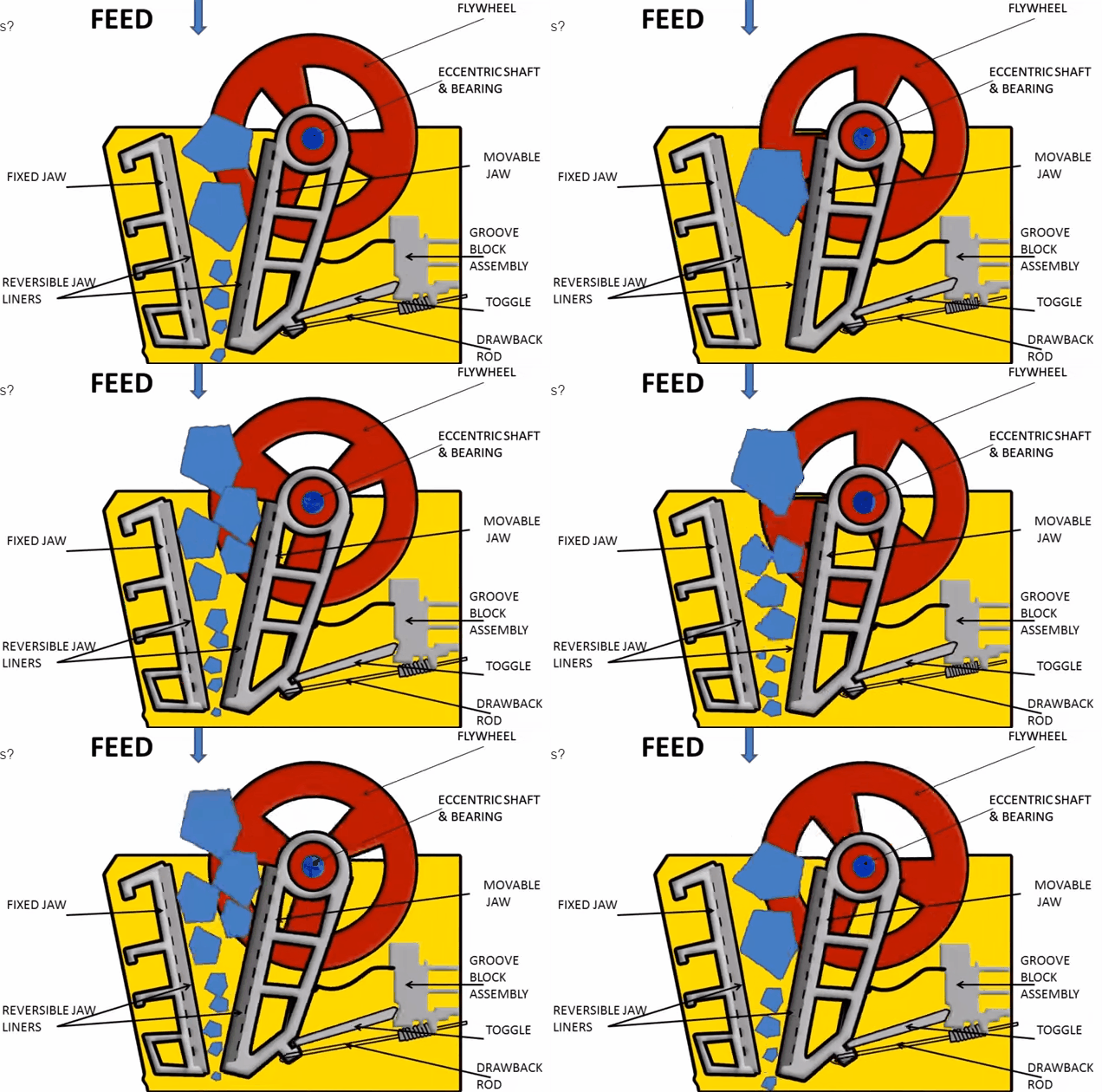
Jaw crushers are perfect for hard, abrasive materials like granite, basalt, and iron ore because of their mechanical operation, which enables effective crushing with little energy waste. Known for its rugged design, reliability, and unmatched crushing capability, the jaw crusher transforms massive rocks into smaller, more manageable materials that fuel countless industries. From building foundations to roadbeds, its efficiency and strength play a crucial role in shaping modern infrastructure. But beyond brute force, there’s a refined science and engineering precision behind how jaw crushers deliver such consistent power and performance. Contractors working on temporary or remote projects often choose a jaw crusher for rent to access powerful crushing capabilities without committing to the high upfront costs of purchasing heavy equipment.
The Strength Of Simplicity
At its core, the jaw crusher operates on a simple yet effective principle — compressive force. The machine uses two plates, known as jaws, to crush material. While one jaw moves in a reciprocating manner, the other jaw stays still. As big rocks come into the chamber, they are slowly squished together until they break into smaller pieces. Jaw crushers are perfect for hard, abrasive materials like granite, basalt, and iron ore because of their mechanical operation, which enables effective crushing with little energy waste.
The design’s simplicity is one of its greatest strengths. In contrast to more complex machines with multiple moving parts, jaw crushers require less maintenance and offer superior durability. This makes them an essential first step in the crushing process — reducing large raw material into smaller pieces for further refinement in secondary or tertiary crushers.
Engineered For Strength And Durability
Jaw crushers are built to withstand extreme conditions. Every component, from the frame to the jaw plates, is designed for longevity and consistent performance. The frames are typically made from cast iron or high-strength steel, ensuring stability under heavy loads. Meanwhile, the crushing jaws are constructed from manganese steel, a material known for its toughness and wear resistance.
Modern jaw crushers have evolved far beyond their early mechanical designs. They now include hydraulic adjustment systems that allow operators to fine-tune the output size with ease. This precision helps meet specific material requirements while improving overall efficiency.
Additionally, advanced lubrication and bearing systems minimize friction, enhancing machine lifespan and reducing operational downtime. The focus on robust engineering ensures these crushers perform reliably in demanding environments — from underground mining operations to large-scale quarries.
Performance That Delivers Results
Jaw crushers are renowned for their ability to handle large feed sizes and deliver high reduction ratios. Their consistent output makes them a preferred choice for producing uniform aggregate used in concrete, asphalt, and construction materials. The wide feed opening allows for efficient processing of oversized rocks, while the adjustable discharge setting gives operators control over product size.
In mining, jaw crushers are often used as primary crushers, setting the stage for further processing. By reducing material early, they improve downstream efficiency and lower energy costs. Many operations also opt for portable or mobile jaw crushers, which bring crushing capability directly to the work site, saving transportation time and expenses. For short-term or project-based needs, companies often use jaw crusher rental options to gain access to powerful crushing equipment without long-term investment.
Innovation Meets Efficiency
The intelligent technology used in modern jaw crushers elevates performance to a new level. Automated control systems monitor pressure, load, and temperature to optimize output and prevent potential overloads. Variable speed drives adjust the crusher’s motion to maximize efficiency, while advanced safety features protect both operators and equipment.
Manufacturers are also prioritizing environmental responsibility. Newer models include dust suppression systems, noise reduction features, and fuel-efficient engines that meet modern emission standards — making them as sustainable as they are strong. Equipment rental services are also making advanced crushing technology more accessible for contractors and construction companies with varying project needs. Providers like Rubbl help businesses gain access to high-performance machinery without the heavy upfront investment of purchasing new equipment.
Final Thoughts
The jaw crusher remains one of the most indispensable machines in material processing. Its balance of raw crushing power, engineering precision, and operational efficiency makes it the go-to solution for breaking down even the hardest materials. From massive quarry rocks to recycled concrete, jaw crushers continue to prove that true strength lies not just in power — but in performance, reliability, and innovation.
Whether in a fixed plant or on a mobile platform, jaw crushers exemplify the perfect fusion of strength and technology, crushing the toughest challenges with unmatched precision.
