

New South Wales’s most extensive planning reform in almost 50 years is expected to bring about revolutionary changes to the state’s house and land development. In addition to expediting project delivery and streamlining approval procedures, the recently introduced NSW Planning System Reforms Bill 2025 seeks to address long-standing inefficiencies that have impeded the expansion of the housing supply.
The Environmental Planning and Assessment Act of 1979 was modernised as a result of growing affordability challenges and a decrease in construction output. With the state’s population growing by more than 15,000 people every month and building approvals declining by about 19% in the middle of 2024, the project represents a clear change in policy toward enhancing housing accessibility and fostering economic growth via a more flexible planning system.
Core Planning System Reforms
The new legislation introduces fundamental changes to development application assessment and approval processes. Housing delivery becomes a central objective of the Act itself for the first time. Climate resilience and proportionality in planning decisions also receive legislative priority. This shift establishes a clear mandate prioritising housing outcomes in planning assessments.
A Development Coordination Authority will consolidate what has been a fragmented approval process. Previously, development applications requiring input from multiple state agencies could stall as they moved between up to 22 different government departments. The single coordination point aims to eliminate duplication and reduce assessment timeframes significantly.
The Housing Delivery Authority receives permanent legislative status under the reforms. This body has already declared over 86,700 homes as State Significant Development. The structural change ensures consistent focus on major housing projects rather than ad-hoc responses to market conditions.
Early indicators suggest the reforms are gaining traction. Planning approvals have accelerated 15 percent compared to March 2023 benchmarks. Development application submissions have increased 28 percent year-on-year. More than 70,000 homes are currently under construction across the state.
Low and Mid-Rise Housing Policy Details
The most tangible reform affecting house and land development took effect on 28 February 2025. The Low and Mid-Rise Housing Policy targets delivery of 112,000 homes across NSW over five years through strategic zoning changes.
The policy modifies planning controls within 800 metres of 171 designated town centres and train stations. This 10-minute walking catchment covers Greater Sydney and extends to the Central Coast, Hunter region and Illawarra-Shoalhaven areas.
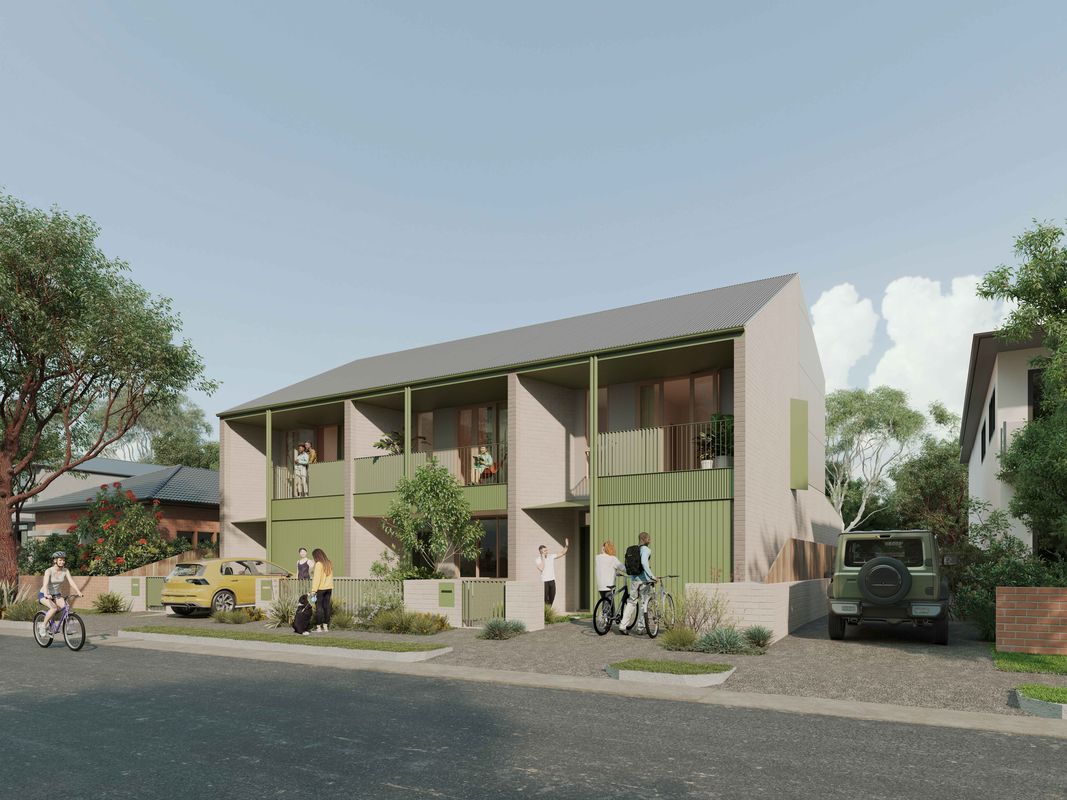
Housing types previously restricted in these zones now receive planning approval pathways. Dual occupancies allow two homes on single lots. Terraces and townhouses with shared walls become permissible. Low-rise apartments of one to two storeys gain approval routes. Mid-rise residential buildings of three to six storeys can now proceed. Shop-top housing combining ground-floor retail with residential units above receives planning pathways.
Specific zoning changes demonstrate the policy’s scope. In R2 Low Density Residential zones, manor houses and multi-dwelling housing receive approval pathways. R3 Medium Density zones can now accommodate residential flat buildings and shop-top housing. Height limits have increased to 9.5 metres for dual occupancies, up from 8.5 metres. Within 400 metres of transport hubs, residential flat buildings can reach 22 metres or six storeys.
Strategic exclusions address environmental and safety concerns. The Blue Mountains, Hawkesbury and Wollondilly local government areas remain outside stage two reforms due to bushfire and flood risks. Land affected by high bushfire hazards cannot utilise the expanded development options. Flood zones, dangerous goods pipelines and excessive aircraft noise also trigger exclusions.
Heritage protections remain intact for individually listed items. Heritage conservation areas fall under the new planning controls but require council assessment and approval. This ensures community character considerations inform development decisions.
Market Implications and Industry Response
The planning reforms create substantial opportunities for residential property development. Industry bodies including the Urban Development Industry Association have endorsed the legislative changes as necessary system improvements. Urban Taskforce Australia and the Planning Institute of Australia share this assessment.
For developers and builders like Brooklyn Homes specialising in residential construction, the reforms provide clearer pathways for medium-density projects in established suburbs. Streamlined assessment processes reduce project timelines and associated holding costs.
Complying Development expansion represents another significant change. Councils now have 10 days to approve minor variations on complying development applications. Deemed approval occurs if this timeframe lapses. A new Targeted Assessment Pathway sits between full development assessment and Complying Development. This serves projects where strategic planning and community consultation have already occurred.
Current market conditions underscore why increased supply matters. Sydney’s median dwelling value reached $1,228,435 in July 2025. Houses averaged $1,525,956 while units came in at $868,341. The rental market shows exceptional tightness with vacancy rates at just 1.5 percent. Annual rental growth shows houses increasing 1.8 percent and units rising 3.6 percent.
These figures reflect deeper structural issues. Rental households now comprise 31 percent of all households, up from 25 percent in 1981. Among lower-income renters, 20 percent spend more than half their income on rent. Home ownership rates have declined from approximately 70 percent in the 1960s to 66 percent in 2021.
Property Development Sector Considerations
The reforms affect various participants in the house and land development sector differently. Established builders with experience in medium-density projects are well-positioned to capitalise on expanded zoning permissions near transport infrastructure.
House and land packages stand to benefit from reduced approval complexity. These bundle land parcels with newly constructed homes. Fixed-price arrangements become more viable when assessment timeframes are predictable. Consent conditions become standardised through complying development pathways.
Investment in residential development sites near the 171 designated town centres and stations has already intensified. Land within the 800-metre catchments commands premium pricing. This reflects the enhanced development potential under new zoning rules.
Companies including Brooklyn Homes and other residential builders are evaluating sites that previously fell outside feasible development parameters. Areas where low-density zoning previously prevented townhouse or apartment construction now present commercial opportunities.
Community Response and Implementation
The reforms have generated mixed community reactions. Some local councils and residents welcome increased housing choice and supply. Others express concern about neighborhood character changes. Infrastructure capacity to support higher-density development also raises questions.
Consultation processes included public exhibition of the policy framework in early 2024. Direct engagement occurred with 49 councils. Feedback influenced refinements to development standards and location selection criteria. Zone applications also received adjustments based on input.
The government has committed to ongoing monitoring of reform impacts. Data collection will track housing approvals and construction commencements. Completion rates and affordability metrics across affected zones will receive scrutiny.
Implementation challenges remain significant. Construction industry capacity constraints pose obstacles. Materials costs and labor availability influence outcomes. Financing conditions also affect whether planning approvals translate into completed homes.
Forward Outlook
The planning reforms represent initial steps in broader housing policy evolution. Additional legislative changes are anticipated as the government monitors early implementation outcomes.
Artificial intelligence integration into State Significant Development assessments may further accelerate approval timeframes. The technology would assist with technical compliance checking and documentation review. This allows planning staff to focus on complex assessment elements requiring professional judgment.
The government’s commitment to deliver 30,000 new homes on surplus public land demonstrates housing investment extending beyond regulatory reform. This includes 8,400 social housing units. These projects will test whether streamlined planning processes actually deliver faster construction outcomes.
For stakeholders navigating the changed regulatory environment, several priorities emerge. Property developers should assess which projects qualify for new assessment pathways. They should identify opportunities in rezoned areas. Landowners in affected zones may discover development potential that previously did not exist. First-time buyers might find expanded housing choice improves accessibility to well-located properties near transport and amenities.
The NSW Planning Portal provides detailed mapping tools showing areas affected by zoning changes. Local councils are implementing state-wide Community Participation Plans. These create consistent consultation approaches across jurisdictions.
Conclusion
Whether these reforms successfully address housing undersupply depends on implementation effectiveness and market response over coming years. The regulatory framework now prioritises housing delivery through streamlined approvals and expanded zoning permissions. The fundamental question is whether the construction sector can coordinate with financing institutions and government agencies to convert planning approvals into completed homes.
For a state where residential development has faced increasing regulatory complexity, these reforms signal clear policy direction toward housing supply expansion. The outcome will shape residential construction patterns and housing accessibility for hundreds of thousands of people over the next decade.
