

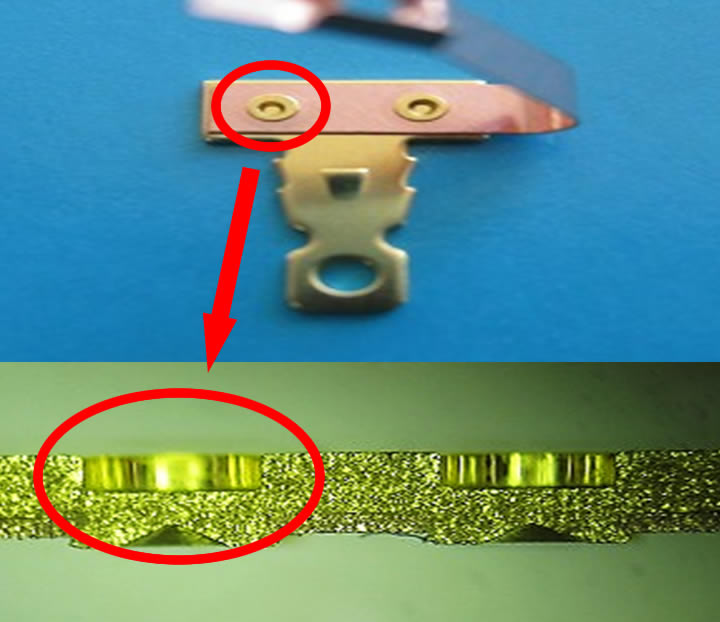
Several distinct stamping processes are used to produce stamped metal parts, each suited to different part geometries and production volumes.
Progressive die stamping is the most common method for high-volume production. The metal strip is fed through a series of stations, each performing a specific operation. The finished part emerges at the end of the line. This method is efficient and consistent, making it ideal for large production runs.
Transfer die stamping is similar to progressive die stamping but uses a transfer mechanism to move the part from station to station rather than the strip itself. This method is used for larger parts that cannot be carried by the strip.
Deep drawing is used for parts that require three-dimensional shapes, such as cups, shells, and enclosures. The metal is drawn into a die to form the desired shape.
Fine blanking produces parts with smooth edges and tight tolerances. It is used for parts that require high accuracy, such as components for automotive transmissions and medical devices.
Bending, punching, and shearing are simpler operations that are often performed on metal sheet to create brackets, panels, and other flat components.
The Materials Used in Stamped Metal Parts
The material selection is one of the most important decisions in the stamping process. Different materials offer different combinations of strength, formability, corrosion resistance, and cost.
Steel is the most common material. Carbon steel is economical and strong. Stainless steel offers corrosion resistance. High-strength low-alloy steel offers higher strength for structural applications. Coated steels, including galvanized and galvannealed, offer corrosion resistance.
Aluminum is lightweight and corrosion-resistant. It is used in automotive, aerospace, and electronics applications where weight reduction is important.
Copper and copper alloys offer excellent electrical and thermal conductivity. They are used for connectors, terminals, and contacts.
Brass and bronze offer good strength and corrosion resistance. They are used for electrical components, hardware, and decorative parts.
Nickel and nickel alloys offer corrosion resistance and high-temperature performance. They are used for battery tabs, connectors, and aerospace components.
Titanium is lightweight and strong. It is used in aerospace and medical applications where performance justifies the higher cost.
The Tooling That Makes It Possible
The die is the heart of the stamping process. It is a precision-machined assembly that contains the cutting edges, forming surfaces, and guides that shape the metal. The quality of the die determines the quality of the finished part.
Die design begins with the part drawing. The designer must determine the sequence of operations required to produce the part, the forces involved, and the tolerances that must be held. The die must be designed to withstand the forces of the press and to produce parts that meet specification over millions of cycles.
Die materials must be hard enough to resist wear and tough enough to resist cracking. Tool steels are commonly used, with surface treatments such as nitriding or coating to extend die life.
Die maintenance is essential to consistent quality. Dies wear over time, and worn dies produce parts that are out of specification. Regular inspection, sharpening, and replacement of worn components keep dies in production and minimize downtime.
Where Stamped Metal Parts Are Used
Stamped metal parts are used in virtually every industry.
In automotive, stamped parts include chassis components, brackets, body panels, engine parts, and electrical connectors. The automotive industry is one of the largest consumers of stamped metal parts.
In aerospace, stamped parts include brackets, panels, and structural components. The high strength-to-weight ratio of stamped parts makes them ideal for aircraft.
In appliances, stamped parts include panels, frames, and internal components. The durability and appearance of stamped metal make them suitable for consumer products.
In electronics, stamped parts include connectors, terminals, shields, and heat sinks. The electrical and thermal properties of the materials are critical in these applications.
In construction, stamped parts include connectors, brackets, and hardware. The strength and durability of stamped metal are essential for structural applications.
In medical devices, stamped parts include surgical instruments, implants, and diagnostic equipment. The precision and corrosion resistance of stamped metal are essential for these applications.
What to Consider When Selecting a Manufacturer
The selection of a manufacturer for stamped metal parts requires careful evaluation of several factors.
The first factor is material expertise. The manufacturer must understand the properties of different materials and how they behave during stamping. They must be able to recommend the right material for the application.
The second factor is tooling capability. The manufacturer must have the experience to design and build tooling that works with the selected material and meets the production requirements.
The third factor is quality control. Stamped metal parts must meet specifications for dimensional accuracy, surface finish, and mechanical properties. The manufacturer must have the equipment and procedures to verify these properties.
The fourth factor is secondary operations. Many stamped metal parts require heat treating, plating, painting, or assembly. The manufacturer must be able to perform these operations in-house or manage them through qualified suppliers.
The fifth factor is production capacity. Stamped metal parts are often required in high volumes. The manufacturer must have the capacity and the equipment to meet the production requirements.
The Bottom Line
Stamped metal parts are essential components in modern manufacturing. They are strong, durable, and cost-effective, and they are used in virtually every industry. The material, the stamping process, and the tooling all determine the performance of the final part. For engineers and buyers, understanding what these parts are, how they are made, and what to look for in a manufacturer is essential to selecting components that perform reliably in demanding applications.
