
The CO2 laser gets its name from the gas mixture sealed inside the resonator tube. Carbon dioxide, nitrogen, and helium are excited by electrical discharge, producing an infrared beam at a wavelength of 10.6 micrometers. This wavelength is absorbed efficiently by organic materials, which is why wood, leather, and acrylic respond so well to the process.
When the focused beam hits the surface, it heats the material rapidly. Depending on the material and the settings, this heat either vaporizes the surface layer, causing it to disperse as smoke, or carbonizes it, leaving a darkened mark. In some materials, the beam causes a chemical change that produces a color shift rather than material removal. Each material responds differently, and the settings must be adjusted accordingly.
A Guide to Materials and Their Behavior
Wood is the most common material engraved with a CO2 laser. Hardwoods like walnut and cherry produce rich, dark marks with excellent contrast. Softwoods like pine engrave more quickly but can show uneven results due to differences in density between growth rings. Plywood and MDF engrave consistently but produce more smoke and require good ventilation.
Acrylic is another favorite because of the way it responds to the laser. The beam leaves a frosted white mark that contrasts sharply with the surrounding clear or colored material. This effect is difficult to achieve with any other method and is why acrylic engraving remains a mainstay of signage and awards.
Leather engraves with a dark, burnished mark that deepens with power. Vegetable-tanned leather produces the best results, while chrome-tanned leather can produce uneven marks and noxious fumes. Glass engraving produces a frosted appearance that is subtle but durable, often used for commemorative pieces and awards. Stone, including slate and granite, can be engraved with high power, producing a light, contrasting mark that is ideal for outdoor plaques.
Coated metals, such as anodized aluminum and painted steel, can be engraved by removing the coating to reveal the base material. This is a common technique for marking tools, equipment, and industrial components. Bare metals, however, reflect the CO2 wavelength and cannot be engraved directly.
What a CO2 Laser Engraving Machine Cannot Do
It is just as important to understand the limitations of the technology. Bare metals, including steel, aluminum, copper, and brass, cannot be engraved with a CO2 laser because they reflect the infrared beam rather than absorbing it. Marking these materials requires a fiber laser, which operates at a shorter wavelength that metals absorb.
Some plastics should never be engraved with a CO2 laser. PVC releases chlorine gas and hydrochloric acid when heated, which corrodes the machine and poses serious health risks. Polycarbonate melts rather than vaporizing, producing messy results and potential fire hazards. ABS and other styrenic plastics can produce noxious fumes. Checking material compatibility before engraving is essential for safety and machine longevity.
Thick materials present another limitation. While a CO2 laser can cut through several millimeters of wood or acrylic, engraving very deep marks requires high power and slow speeds, which may not be practical for production. For deep engraving in hard materials, other methods may be more efficient.
The Importance of Ventilation and Safety
Engraving organic materials produces smoke, fumes, and particulate matter. Proper ventilation is not optional. A CO2 laser engraving machine should be connected to an exhaust system that vents to the outside or through a filtration unit that removes harmful compounds. For materials like leather, rubber, and certain plastics, filtration is essential because the fumes can be toxic.
Fire safety is another critical consideration. Laser engraving involves a focused beam of heat, and some materials are more prone to ignition than others. Never leave a machine running unattended, and keep a fire extinguisher rated for electrical and material fires nearby. Regular cleaning of the machine bed and extraction system prevents the buildup of combustible debris.
Choosing the Right Machine for the Work
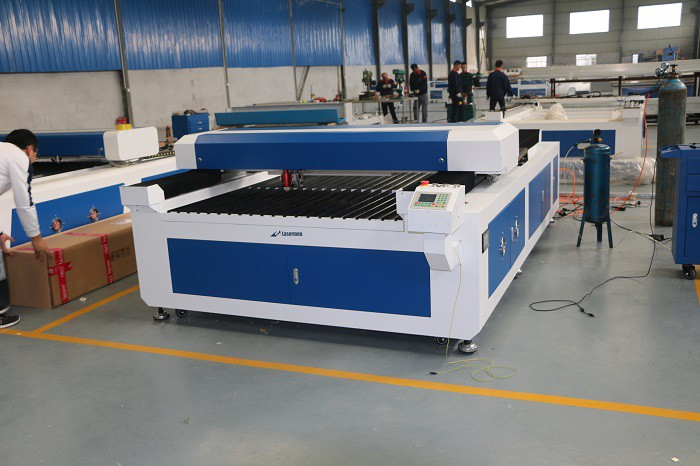
The power rating of a CO2 laser engraving machine determines what it can process and how quickly. Machines in the 40 to 60 watt range handle light engraving on wood, leather, and acrylic, as well as cutting thin materials. They are suitable for small shops, schools, and hobbyists. Machines in the 80 to 100 watt range handle thicker materials and faster production speeds and are suitable for commercial work. Machines at 150 watts and above are used for deep engraving on hard materials and for industrial production.
The bed size determines the maximum dimensions of the workpiece. Smaller machines, around 300 by 400 millimeters, handle small items like coasters and keychains. Larger machines, 600 by 900 millimeters or more, accommodate larger signs, panels, and furniture components.
The cooling system affects tube life and performance. Water-cooled tubes require a chiller to maintain optimal temperature. A quality chiller extends tube life and ensures consistent engraving results.
The software determines how easily designs can be created, edited, and sent to the machine. Good software supports common file formats, provides intuitive controls for setting power and speed, and includes features like image processing and nesting.
The Bottom Line
A CO2 laser engraving machine is a versatile and capable tool, but it is not a universal one. It excels at marking organic materials, producing permanent, high-contrast results that do not fade or wear away. It cannot mark bare metals, and it should never be used on certain plastics. Understanding both the capabilities and the boundaries of the technology is what separates a successful investment from a frustrating one. For businesses and individuals working with wood, acrylic, leather, glass, and stone, a CO2 laser engraving machine opens up possibilities that no other tool can match.
